
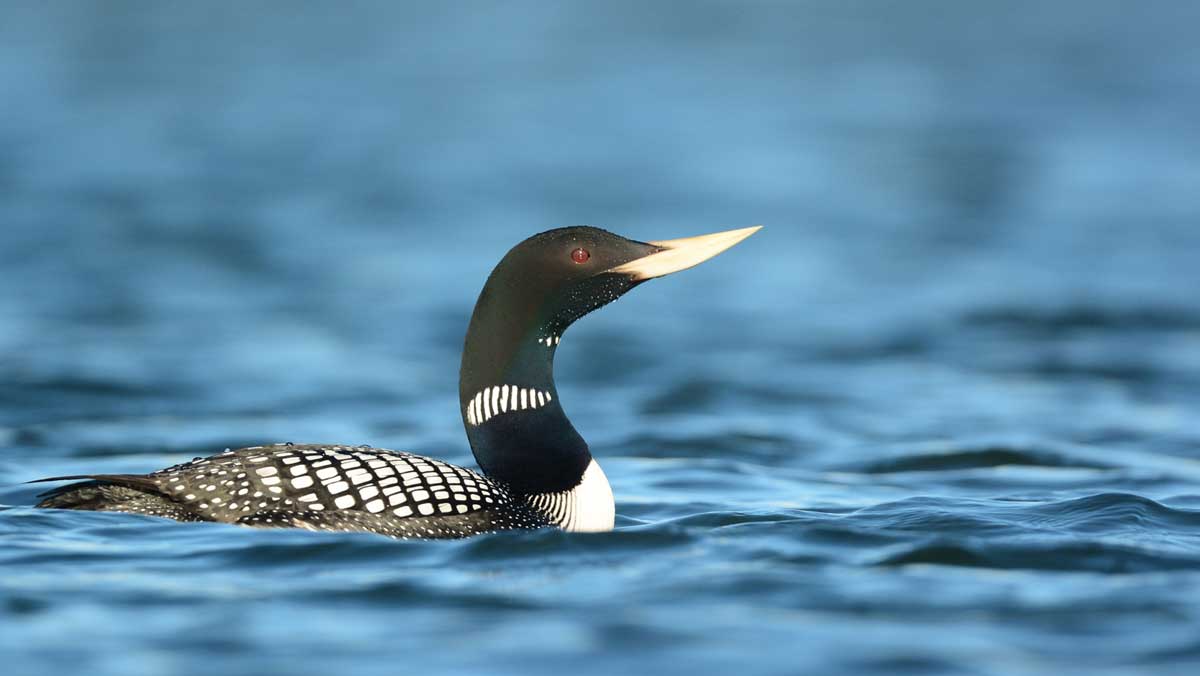
Download higher resolution files at the bottom of the page.
What is a SWAP?
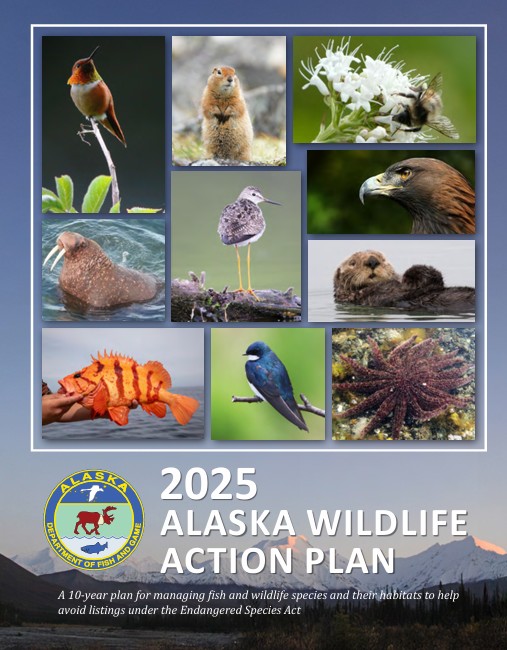
Cover of the Alaska's 2025 State Wildlife Action Plan (SWAP)
The State Wildlife Action Plan (SWAP) identifies “species of greatest conservation need” (SGCN), key habitats, priority issues/threats, and conservation actions for fish and wildlife in each state. It specifically evaluates the status of SGCN and recommends conservation actions, before species become imperiled and more costly to conserve and manage. Doing so provides direct ecological, economic, aesthetic, scientific, and recreational benefits for Alaska.
Why does Alaska have a SWAP?
The SWAP provides a framework for identifying priority species and habitats, addressing threats, and implementing effective conservation actions consistent with the sustained yield principle in the Alaska Constitution (Art. VIII, § 4) and the mission of the Alaska Department of Fish and Game (ADF&G). Both emphasize maintaining long-term, sustainable use of natural resources while conserving robust fish and wildlife populations.
The SWAP also serves as a nonregulatory alternative to the federal listing process under the Endangered Species Act (ESA). By addressing population declines early, Alaska can reduce the need for future ESA listings and help ensure that natural resource use continues to benefit Alaskans without interruption or additional federal regulation.
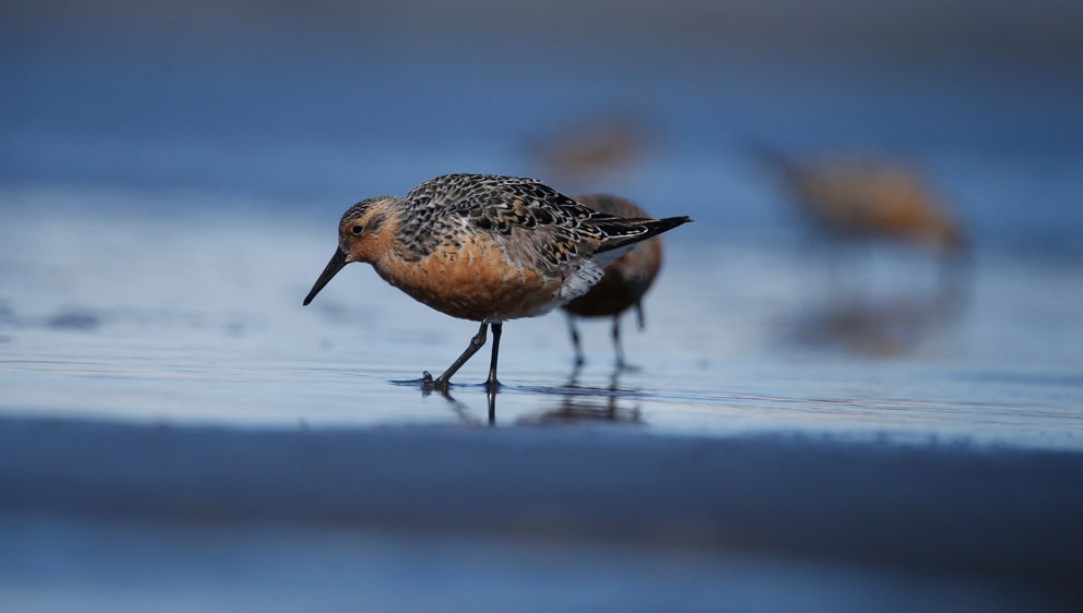
Red Knot. B. Richard, ADF&G.
The SWAP informs decision-making, resource allocation, and coordination across agencies and partners, ensuring the long-term conservation and management of wildlife. Alaska's vast and remote landscapes support diverse habitats, yet the status of many SGCN remains poorly known. To address this, the SWAP not only focuses on SGCN with documented declines but also fills critical information gaps of those at risk of decline, thereby enabling proactive wildlife conservation and management.
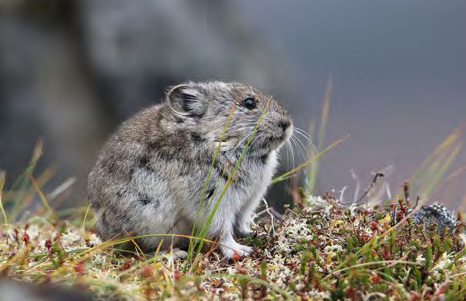
Collared pika. A. Underwood, ADF&G.
How are activities funded?
Alaska is required to have a SWAP to receive funding from the State Wildlife Grants (SWG) Program, which was created by Congress in 2000 to support each state’s conservation actions for its own SGCN and habitats, thereby preventing the nation’s fish and wildlife from becoming endangered. SWG remains the only federal program specifically designed to reduce the need to list species as threatened or endangered under the ESA. Funding is distributed through the U.S. Fish and Wildlife Service (USFWS).
How does ADF&G use the SWAP?
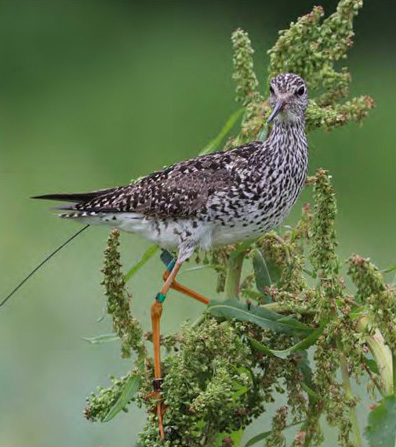
Lesser Yellowlegs. K. Christie, ADF&G.
The 2025 SWAP primarily guides the actions of the Threatened, Endangered and Diversity (TED) Program and supports work within the Division of Sport Fish, the Marine Mammal Program and the Lands and Refuges Program. Examples of projects include conservation actions for mitigating decline of migratory songbirds and shorebirds, bats, marine mammals, and certain aquatic species that have data gaps or are impacted by invasive species.
SWG funds allow ADF&G to conserve and manage many species that lack dedicated funding sources (e.g., license and ammunition sales). Implementing the SWAP requires collaboration with an extensive number of partners, including state and federal agencies, Tribal entities, nongovernmental organizations, species specialists and the public, to maintain healthy wildlife populations that benefit all Alaskans and visitors. SWG funding in Alaska has already supported monitoring and research on more than 120 SGCN and their habitats.
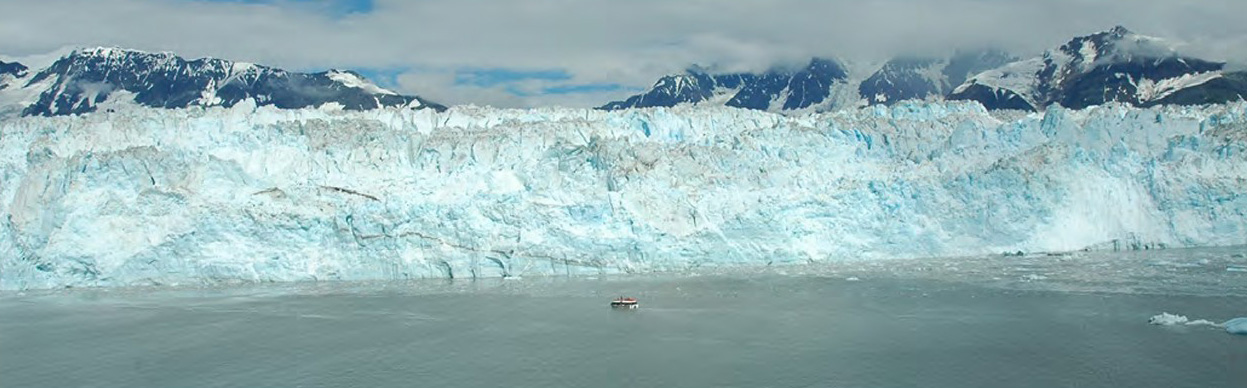
Hubbard Glacier, ADF&G.
A plan shaped by and benefiting all Alaskans
The SWAP reflects input from a wide range of contributors over a lengthy planning and revision process, followed by a 30-day public review period. ADF&G revises the SWAP every ten years to guide the next decade of conservation and management work for Alaska.
ADF&G extends appreciation to the many state and federal agencies, user groups, Tribal entities, nongovernmental organizations, industry professionals, species-specialist groups, and members of the public, who provided thoughtful review and suggestions throughout the 2025 SWAP revision process.
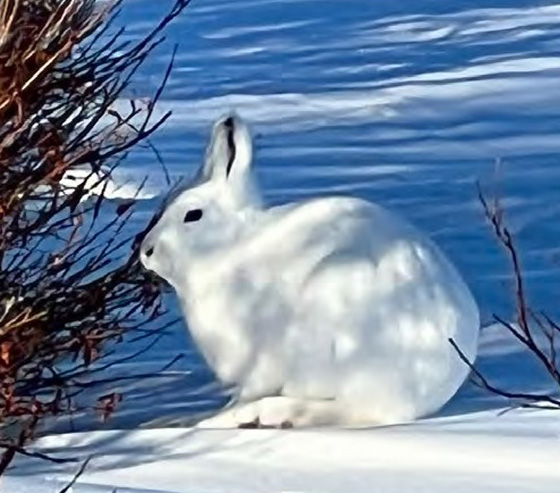
Alaska Hare, C.Barger, ADF&G.
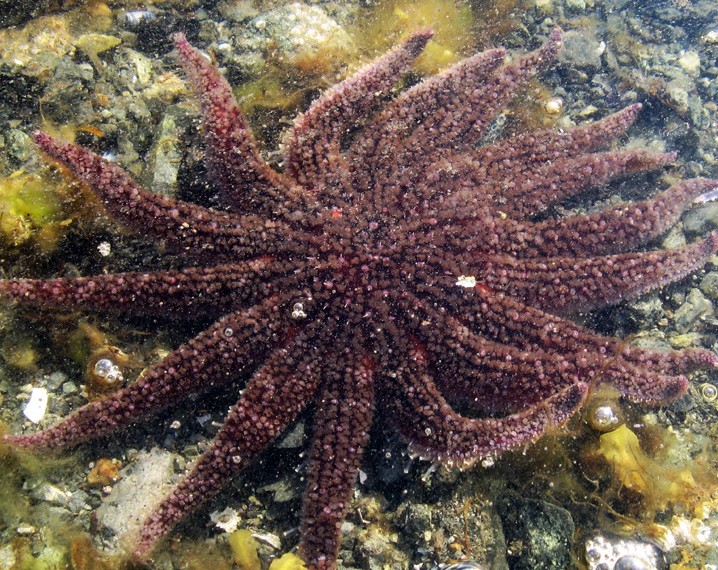
Sunflower Sea Star, ABR.
Downloads:
Alaska’s 2025 SWAP (PDF 20,070 kB)(All chapters as a single PDF, low resolution version)
Individual SWAP chapters (high resolution maps and figures):
- Frontmatter: Executive Summary, Table of Contents, Acknowledgements, etc. (PDF 8,138 kB)
- Frontmatter: Acronyms and Abbreviations (PDF 241 kB)
- Frontmatter: Cover and Executive Summary (PDF 8,134 kB)
- Frontmatter: Foreword and Acknowledgements (PDF 1,159 kB)
- Frontmatter: Table of Contents (PDF 412 kB)
- Chapter 1: Introduction (PDF 11,548 kB)
- Chapter 2: Roadmap to Plan Elements (PDF 2,817 kB)
- Chapter 3: Alaska Overview (PDF 6,533 kB)
- Chapter 4: Species of Greatest Conservation Need (PDF 5,695 kB)
- Chapter 5: Distribution and Abundance of Wildlife in Alaska (PDF 17,651 kB)
- Chapter 6: Key Habitats for Wildlife in Alaska (PDF 22,894 kB)
- Chapter 7: Threats to Wildlife (PDF 15,552 kB)
- Chapter 8: Conservation Actions (PDF 7,102 kB)
- Chapter 9: Monitoring and Evaluation (PDF 7,913 kB)
- Chapter 10: Alaska Priorities (PDF 8,307 kB)
- Chapter 11: Plan Development, Implementation and Review (PDF 3,524 kB)
- Chapter 12: Appendices (PDF 8,661 kB)
To view an archive of Alaska’s previous SWAP documents, please click here: SWAP Archive.
If you have any questions about the SWAP, please contact the Threatened, Endangered, and Diversity Program's Conservation and Management Coordinator, Julie Hagelin (julie.hagelin@alaska.gov).
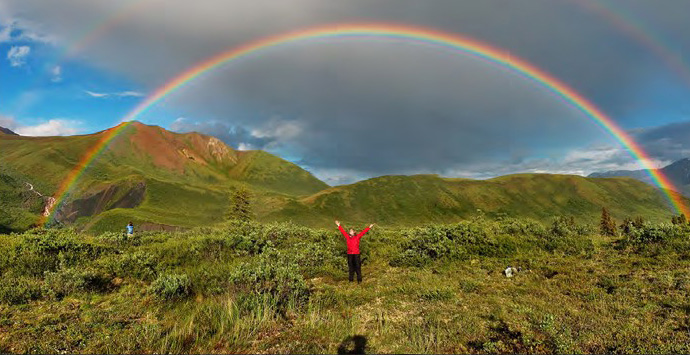
Double rainbow over fields at McNeil River State Game Sanctuary, ADF&G.