
About Rotenone
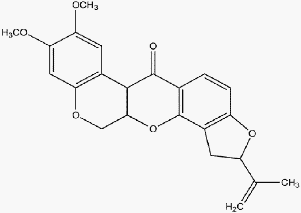
Rotenone is a naturally occurring compound derived from the roots of tropical plants in the genus Derris, Lonchocarpus or Tephrosia. It has been used for centuries by indigenous people in Central and South America to catch fish for food. Rotenone has been used as a pesticide since the mid-1800s and by fish managers in the U.S. since the 1930s to remove unwanted or invasive fish. Rotenone is an active ingredient in many insecticides and in the United States past uses have included use in gardens, commercially raised crops, stored grain and for treating lice on domestic animals such as dogs and horses.
Currently, rotenone is commercially available as either a wettable-powder or liquid and is registered by the Environmental Protection Agency (EPA) as a restricted-use pesticide for fish management. Readily absorbed through the gills, rotenone is lethal to fish because it blocks the biochemical process that allows fish to utilize the oxygen in their blood during cellular respiration. Draining and chemical treatment are usually the only practical ways to completely eradicate invasive fish. In most cases, chemical treatment is a far more efficient and practical method than draining. Rotenone can also be neutralized with potassium permanganate.
Why Use It?
It is the Alaska Department of Fish and Game's (ADF&G) legal responsibility to "protect, maintain, and improve the fish, game, and aquatic plant resources of the state and manage their use and development in the best interest of the economy and well-being of the people of the state consistent with the sustained yield principle". The spread of invasive species is a growing concern throughout Alaska. Invasive species threaten fisheries resources and the economies that rely on them. Rotenone is a safe, proven and effective tool for eradicating populations of invasive fish.
In Southcentral Alaska, the Department has concerns about invasive northern pike. ADF&G has discontinued stocking many lakes due to illegally introduced pike populations. Northern pike are a prized and valued subsistence and sport fish where they naturally occur in Alaska. However, when introduced to waters outside of their natural range, pike can quickly decimate salmon and trout populations. Generally, when pike become established in shallow lakes in Southcentral, they decimate populations of all the other fish in the lake. This has been documented many times in area lakes. This not only reduces opportunities for anglers to fish for trout and salmon, but also increases the chances that pike will further spread into nearby streams. The Department is very concerned about invasive pike impacting Alaska's wild salmon and trout and the potential consequences to Alaskans who rely on those resources. The Department is trying to prevent further spread of invasive northern pike to protect our salmon and trout resources and eventually reclaim fisheries that have been destroyed by pike.
Northern Pike Management Plans
Current and original management plans
ADF&G has an Invasive Pike Management Plan (See above) that describes the Department's step-wise approach to addressing the pike problem and lists potential management actions that will be considered. Decisions are made on a system by system basis. Initial management actions include liberalizing sport harvest and implementing control netting programs. However, where preliminary actions like these have not successfully controlled invasive pike populations, the plan guides the Department to employ more aggressive methods such as draining the water body or using a chemical treatment such as rotenone to remove the invasive pike. Draining and chemical treatment are the only proven ways to completely eradicate invasive fish. In most cases, chemical treatment is a far more efficient and practical method than draining.
Health Effects
The federal Environmental Protection Agency (EPA) controls pesticide use in partnership with state agencies. Before allowing application of a pesticide, the EPA studies each one to be sure they do not pose risks to human health and the environment.
The EPA regularly reviews all pesticides. In addition to testing the EPA requires precautionary measures such as wearing protective clothing for the applicators and restricting drinking and/or contact with treated water according to criteria listed in the product label. In their re-registration assessment, the EPA concluded that using rotenone according to product label instructions does not pose unreasonable risk to human health or the environment. However, the EPA does recommend precautionary measures such as wearing protective clothing for the applicators and closing water bodies treated with rotenone during treatment. The World Health Organization classifies rotenone as moderately hazardous because it may be absorbed by ingestion or inhalation. Inhalation of concentrated rotenone in the powder form is the most direct threat to humans, and caution is required during handling. The Alaska Department of Environmental Conservation requires that rotenone applicators receive state certification in applying pesticides.
There is a lot of information currently available concerning rotenone and human health and safety issues. Much of this information is synthesized in the following websites: The Rotenone Stewardship Program and The Extension Toxicology Network.
Millions of dollars have been spent in the U.S. on research to evaluate the safety of rotenone, and the majority of this work has focused on human health questions. Results of these studies confirm that rotenone does not cause birth defects, reproductive dysfunction, gene mutations or cancer. No fatalities in humans have been reported in response to proper use of rotenone products. Drinking rotenone poses little risk to humans because of the low concentration used and rapid degradation in the aquatic environment. Drinking rotenone from waters treated with rotenone poses little risk to humans because of the low concentration used for fish management and digestive processes that break much of the rotenone down. For example, it is estimated that a 160-pound adult would have to drink 76,000 gallons, and a 22-pound child would need to drink over 4,500 gallons of rotenone-treated water at one sitting to receive a lethal dose. Although ingestion of rotenone from rotenone-killed fish is not considered harmful, the EPA does not recommend that rotenone-killed fish be used for human consumption because no tolerance (acceptable residue level permitted in fish flesh) has been set by the EPA.
There have been highly publicized concerns that rotenone exposure could be associated with Parkinson's disease. Given sufficient exposure, rotenone may cause specific damage to nerve cells causing signs of neurotoxicity similar to Parkinson's disease, but rotenone has never been shown to actually cause Parkinson's disease. Recent toxicology and epidemiology studies linking rotenone exposure to Parkinson's disease remains inconclusive. Animal toxicology studies demonstrating Parkinson's-like effects were conducted using routes of and long-term exposure regimes not germane to potential human exposure associated with fishery uses. The epidemiology studies linking Parkinson's disease to farmers with a history of using of pesticides, including rotenone, are largely qualitative in nature and paid little or no attention to personal hygiene, safety and safety equipment which use is now mandatory in fishery applications. For the rotenone applicator, who is most at risk for exposure, the use of required PPE will significantly reduce, if not eliminate, exposure. For the general public, restricted access to the treatment area until rotenone subsides to safe levels and the use of potassium permanganate to detoxify water leaving the treatment area will virtually eliminate exposure. The EPA states rotenone concentrations below 90 parts per billion are safe for human contact and below 40 parts per billion are safe for drinking. Target rotenone concentrations used for fish control in Alaska have always been far below the limit deemed safe for human contract.
Environmental Effects
Rotenone can degrade rapidly in the environment so there is no long-term accumulation in water, soil, plants, or animals. Rotenone breaks down naturally with exposure to light and high temperatures but can persist for much longer in cold temperatures, which can be advantageous for some fishery-related applications. Rotenone travels less than an inch through most soil types with the exception of sand, where it can penetrate up to three inches. Because rotenone does not leach far into underlying sediment and binds strongly to soil organics, it does not impact groundwater supplies.
Rotenone is most lethal to organisms with gills, so aquatic invertebrates such as zooplankton, tadpoles, and other fish can be killed along with the target fish species. These impacts can be mitigated by timing rotenone treatments during the fall or winter when many aquatic insect populations are low or in dormant stages and no tadpoles are present. Populations of aquatic invertebrates that are affected generally recover within a year or two. Most freshwater clams and snails have more resistance to rotenone than fish and usually survive rotenone treatments. Plants, birds, adult amphibians, and mammals are typically not affected by rotenone because they lack that rapid absorption route that fish experience because of their gills. Rotenone is poorly absorbed through the human skin, and rotenone has a slow rate of gut absorption, likely reflecting its metabolism and/or rapid breakdown in the gastrointestinal tract.
Alternatives
There are other methods to remove invasive fish, but the alternatives are not as effective or efficient as rotenone and rarely result in complete removal. Some of these methods have serious limitations and impacts on habitat.
Fishing Regulations
Increasing bag limits and allowing many different gear types (such as bowfishing) can increase pike harvest. Pike regulations in Southcentral Alaska are very liberal and in all areas in southcentral it is illegal to release a live pike after capture. Typically, anglers prefer to capture larger pike but when high harvest occurs it eventually reduces the average size of the pike available. Young pike, up to four years old, have been shown to consume the most juvenile salmonids and can deplete salmonid populations. This loss of a rich food source can further limit pike growth and is often referred to as often "stunting". To date, angler harvest alone has not been shown to be an effective tool to eliminate pike populations.
Netting
Nets have been used to remove invasive northern pike in Southcentral. However, nets don't always catch all sizes of pike, particularly small pike. Repeated netting is necessary to control these pike populations, and these programs are labor intensive and costly. Nets are easiest to use in shallow, non-vegetated areas. Because pike prefer vegetated areas, nets must be fished in or near those areas which can be problematic due to entanglement and net damage. Nets can also catch non-target species of fish and wildlife. Netting can reduce populations of invasive fish, but this method can rarely eliminate them entirely.
Electrofishing
Specialized electrofishing equipment delivers an electrical current into the water. When fish encounter the current, the electricity causes the fish to briefly lose control of its swimming muscles so they can be easily netted. The equipment is very sensitive, and generating the correct electrical field depends on water chemistry and lack of vegetation. Because pike prefer areas with dense aquatic plants, electrofishing has had limited success for pike removal. Electrofishing loses its effectiveness in water deeper than six feet.
Biological Controls
Biological controls may include introducing a predator that feeds on the unwanted species or stocking sterile fish to compete with fertile fish during spawning. However, introduction of nonnative fish would be against Alaska state law and ADF&G's stocking policy because of the potential for the new species to drastically change the existing fish community. Releasing sterilized fish to outcompete fertile spawners would take years to implement and may not be 100% effective.
Environmental Controls
Draining all of the water out of a lake to remove unwanted fish has been done in the Lower 48, but in most cases draining even a small water body is usually impractical. This method is not possible for rivers or streams and most lakes. Draining a waterbody requires many permits and, in populated areas, there are many questions that need to be addressed such as what happens to the property owner's shoreline, wells, water rights, leach fields, including planning where the displaced water go? How is incoming water, such as a stream or spring, controlled? What happens to the other wildlife? Success is also highly dependent on weather.
Fish Barriers
The development of barriers to prevent pike entry into a waterbody is ongoing. Pike are poor jumpers when compared with many anadromous fish species, and this is a weakness we are looking to exploit. While barriers may be able to prevent pike from passing on their own, they will not eliminate existing populations.
Percussion
Explosives and pneumatic pressure have been used in the past in some places. Explosives are extremely expensive, dangerous, kill all wildlife, and could significantly change the lakebed or shoreline. Permits for explosives are difficult to obtain. Any percussion must be very large and very close to the fish to rupture its internal organs or swim bladder. It is difficult to generate a large enough concussion in the heavy aquatic vegetation where pike tend to reside. Similar to netting, repeated treatments are necessary to reduce the pike, and it is doubtful it could eliminate undesirable fish 100%.
Examples of Use
Rotenone is used by agencies in other states to control harmful invasive fish, illegally introduced fish, or a diseased species at a fish hatchery. Rotenone is also used to treat waters before creating reservoirs and before restoring threatened or endangered species. It is also employed as a scientific sampling tool to study fish communities.
Rotenone has a long history of success in controlling fish when used according to EPA standards. In other areas of the United States, many water supply and fishing reservoirs had rotenone applied before stocking with fish. This document discusses the use of Rotenone in North America from 1988 to 1997. One example is the Strawberry Reservoir in Utah, which is now "Utah's premiere cold-water fishery". The release of live bait fish changed the reservoir so that chub, suckers, yellow perch and carp soon took over. Recreational fishing seriously declined after the illegal releases of these bait fish. Rotenone planning began in 1986, and the rotenone project was completed in 1990. The trout fishery recovered quickly, and Strawberry Reservoir is again one of Utah's most important trout fisheries.
Rotenone helped to improve the ecological quality of Diamond Lake in Oregon which was drastically diminished by the introduction of tui chub. The chub reduced the survival and growth of rainbow trout by out-competing them for zooplankton. The zooplankton that grazed on algae in the lake were depleted by the chub. The loss of zooplankton resulted in the uncontrolled growth of several forms of algae which released neurotoxins that were harmful to humans and their pets. This resulted in restrictions to boating and swimming in the lake. After the algae blooms died and decayed, the decomposition depleted oxygen from the lake, further degrading the aquatic environment for other fish. In 2006, the Oregon Department of Fish and Wildlife successfully treated Diamond Lake with rotenone. The fishery has been restored, and the lake is now safe for recreationists.
In New York's Adirondack Mountains, wild brook trout are highly sought after game fish. Since the 1950s, over 150 sites in the Adirondacks have been treated with rotenone to restore wild brook trout populations. In addition, Cornell University researchers found that by re-establishing native fish to certain ponds, such as brook trout, the native plankton populations were also restored. All forms of plankton are important food sources, either directly for fish, or indirectly for the insects that fish eat. Thus, the entire ecosystem of the pond was renewed by the reintroduction of native fishes.
Extensive public involvement is the key to success!
Most rotenone projects for fisheries restoration go through broad scientific and public review, and are just one piece of a larger fisheries management plan.
At Lake Davis in California, fishery managers with the California Department of Fish and Game (CDF&G) were concerned that illegally stocked northern pike would escape over the dam and occupy the Sacramento River, which is home to several endangered species, including native King salmon. The state planned to apply rotenone to remove the illegally stocked northern pike, but the public was concerned about the release of rotenone into the public water supply. Public misunderstanding, lawsuits about alternate water supplies, and political positioning also contributed to polarizing the public support for the use of rotenone in this project. Neither the consequences of the illegal introduction of pike on the native King salmon, nor the renewal of the sport fishing were a focus of the media. Also, there were confrontations between pro- and anti-rotenone supporters. This highly publicized controversy led to technical and political limitations on rotenone treatment in Lake Davis, and the lake required a repeat treatment only a few years later. It was a very costly endeavor for the State of California, and the lesson learned was that there needs to be extensive agency planning and public involvement in fishery-restoration projects involving the use of rotenone.
CDF&G, with support from the public, again treated Lake Davis with rotenone. This project was successful, and CDF&G re-stocked the lake with rainbow trout.
The Department realizes there may be some concern about rotenone. ADF&G encourages public comments, questions, and feedback regarding plans to use rotenone for invasive northern pike eradication.
Current Projects
Lalen and Visnaw Lake Northern Pike Eradication
Planning and public outreach are currently underway for the treatment of Lalen Lake and Visnaw Lake in the fall of 2026. These lakes have confirmed northern pike populations and stocking has been reduced or eliminated as a result. In order to return these lakes to full stocking, ADF&G will use rotenone to remove all northern pike before restocking both lakes in 2027. This effort is part of ADF&G's effort to reduce, prevent, and eliminate invasive pike populations.
For questions on this project please contact:
Parker BradleyFisheries Biologist
1801 S Margaret Dr, Suite 2
Palmer, Alaska 99645
Tel: 907-746-6328
Email: parker.bradley@alaska.gov
Alexander Creek Drainage Suppression
ADF&G has been conducting suppression efforts in the Alexander Creek Drainage since 2011. The goal of this suppression is to reduce the pike population as much as possible to reduce the predation on Chinook salmon and other native species. For the most part, this has been done by aggressively gillnetting side sloughs within the drainage. Since 2011 over 34,000 pike have been removed from the drainage, however Chinook salmon returns have continued to decline. In an all-out effort to save Chinook salmon in the drainage ADF&G is using rotenone as a suppression tool.
Despite the high number of pike removed from the drainage the pike population is still quite robust. This can largely be attributed to the difficulty in catching small pike. Pike reach maturity at age one for males and two for females. In the Alexander Creek Drainage, it is hard to catch females before they reach maturity and spawn. This leads to there always being more small pike to catch next year. In order to eliminate these small pike, the department is using rotenone in side sloughs along Alexander Creek and in Sucker Lakes. This should allow us to drive down numbers in combination with continued netting. Few nontarget fish utilize the treated areas and low levels of bycatch are expected.
For questions on this project please contact:
Parker BradleyFisheries Biologist
1801 S Margaret Dr, Suite 2
Palmer, Alaska 99645
Tel: 907-746-6328
Email: parker.bradley@alaska.gov
Completed Projects
Anchorage Area
- Removal of invasive pike in the Fire Creek System 2022
- Removal of invasive goldfish from Cuddy Pond in 2019
- Removal of invasive northern pike from Otter Lake in Joint Base Elmendorf-Richardson in 2014
- Removal of invasive northern pike from Sand Lake in 2009
- Removal of invasive northern pike from Cheney Lake in 2008
Mat-Su Area
- Removal of invasive pike in Memory and Knik Lakes in 2025
- Removal of invasive northern pike in Kings and Anderson Lakes in 2020
- Removal of invasive northern pike in Kashwitna Pit in 2021
Kenai Peninsula
- Removal of invasive pike from the Miller Creek system in 2021
- Removal of non-native fathead minnows from a pond in the City of Kenai in 2019
- Removal of invasive pike and muskellunge from an eight-lake complex in the Tote Road area near Soldotna in 2018
- Removal of invasive northern pike from the entire Soldotna Creek Drainage near Soldotna during 2014-2017
- Removal of invasive northern pike from Stormy Lake near Nikiski in 2012
- Removal of invasive northern pike from Scout Lake in Sterling in 2009
- Removal of invasive northern pike from Arc Lake in Anchorage in 2008
You Can Help!
Get involved. Send written comments during official public comment periods for projects involving rotenone. Public comments periods will be announced in local newspapers and collected by the Pesticide Use Permits | AK Dept. of Environmental Conservation.
For questions or comments, contact Parker Bradley at 907-746-6328 or parker.bradley@alaska.gov.
Fish for pike in Southcentral! Fishing for pike is fun, and you can help suppress their numbers in waters where they are not native. Always check the regulations before fishing, but in most places in Southcentral Alaska, you can harvest as many pike as you want. For locations to fish pike check out the Invasive Pike Mapper at Pike | Alaska Fish Resource Monitor.
Never move fish from one water body to another or release live fish. The same applies to any aquatic organism. This is a class A misdemeanor in Alaska.
Protect your fisheries. Report illegal stocking immediately to your local ADF&G office or to Fish and Wildlife Safeguard at 1-800-478-3377.
FAQs
The following are some frequently asked questions about how rotenone might affect humans, pets, wildlife, and the environment.
Rotenone can be applied in either a wettable powder or liquid form. Depending on lake characteristics, rotenone is typically pumped into the water from a boat. The propeller wash from an outboard motor or pumps can help circulate the rotenone through the water.
Backpack sprayers can also be used to apply rotenone to wetland areas or small tributaries.
Prenfish Fish Toxicant and Rotenone Fish Toxicant Powder are the rotenone formulations under consideration for use by ADF&G.
Pesticides are controlled by the U.S. government, which requires toxicity to be tested according to strict standards. The Environmental Protection Agency requires all pesticide manufacturers to test their products and publish a fact sheet about their testing. This fact sheet is called a Safety Data Sheet, or SDS.
The SDS must show the smallest amount that would kill 50 percent of the test organisms, which is called the LD50. Furthermore, the LD50 must be shown so people can compare the test results in other organisms to humans.
Millions of dollars have been spent to verify the safety of rotenone so it could be registered and licensed by the EPA. The EPA has concluded that the use of rotenone for fish control does not present a risk to humans or the environment when used according to label instructions.
It is not recommended that you drink rotenone-treated waters, and the public will be made aware of this through signage and news releases.
However, even if people were somehow unaware of the warning and accidentally drank water containing rotenone used to control fish, the risks would be very slight because of the low concentrations used.
The EPA states rotenone concentrations less than 40 parts per billion are safe to drink, and most rotenone treatments conducted in Alaska result in rotenone concentrations below that level. Rotenone is not readily absorbed by mammals that consume it. It is estimated that a 160-pound person would have to drink about 76,000 gallons of rotenone-treated water to receive a lethal dose.
You are strongly cautioned not to eat fish that have been treated with rotenone because no federal or state guidelines are in place for eating fish taken after rotenone treatment. Also, salmonella and other bacteria may grow on any fish that is not properly preserved, such as fish that have been floating in a lake for some time, making them unsafe to eat.
To control fish, rotenone is used in very low concentrations. Rotenone residues in treated fish are generally very low, are broken down quickly, and are not easily absorbed through the gut of the animal eating the fish.
Birds, cats, dogs, and other mammals that eat treated fish and drink treated water will not be affected. If animals eat fish or drink the treated water, rotenone will be broken down by the strong enzymes naturally present in their stomachs and intestines.
Birds and mammals that rely on the former fish population may be affected slightly because of the temporary absence of fish, but they usually find other food. In Southcentral Alaska, northern pike are not typically a major prey source for other wildlife.
However, animals with gills, such as tadpoles and some aquatic insects, are more susceptible because rotenone is absorbed directly into their bloodstream through the gills. Studies have shown those animals will naturally repopulate an area after the rotenone neutralizes. The Department can further mitigate this by timing treatments in late summer or early fall when life stages of some aquatic organisms have fully developed, making them less susceptible to rotenone exposure.
The temporary loss of food for birds during mating or nesting would be carefully considered during the planning process. ADF&G already adjusts netting projects to avoid the time when loons and other water birds are nesting and raising their young. A rotenone project would also be carefully timed so the least amount of impact to nesting waterfowl would occur. For example, the plan could spell out that rotenone treatments would only start after the year’s chicks have fledged and are capable of flying to a neighboring lake or stream. Rotenone treatment could also be timed to occur in late fall, when most migratory waterfowl have already left the area.
No health effects to the public from rotenone used as a fish management substance are known. In trials of airborne drift in the Lower 48, the highest rotenone concentrations found during treatments were approximately 1,000 times lower than what is estimated to be safe levels. There will not be any drift into air from projects involving liquid rotenone. Liquid rotenone is applied directly to the water. Powdered rotenone will be mixed with water before being applied with the drums covered to minimize any drift of powder.
During the planning process, arrangements will be made to handle the expired fish. Most of the dead fish that float to the surface will be collected and properly disposed of. Some of the dead fish will naturally sink to the bottom of the lake where they will decompose and release nutrients back into the water. This process will assist in the production of plankton which will, in turn, help re-establish the invertebrate community in the lake.
If biologists want to quickly neutralize the effects of rotenone, potassium permanganate can be used. Potassium permanganate is an oxidizing agent used worldwide in water treatment plants to purify drinking water.
The powdered formulation has no smell. The liquid prenfish does have a noticeable smell, which comes from the substances added to liquid rotenone to help it spread through the water. This smell may last for several days, depending on air and water temperatures and winds. There are no health effects from this smell.
For the best information about your area, contact your local ADF&G office. For questions or comments, contact Parker Bradley at 907-746-6328 or parker.bradley@alaska.gov.
More Resources
We encourage you to become fully informed about rotenone and its uses in fisheries management. If you have questions about your local fisheries,contact your closest ADF&G office.
One of the best sources to learn more about rotenone is the American Fisheries Stewardship Program. This national professional society runs a Rotenone Stewardship Program. Visit the site for photos of application, manuals, a discussion forum, lists of experts, and more.
The United States Environmental Protection Agency (EPA) is the federal agency responsible for pesticides, including rotenone. The re-registration document can be viewed online and read more about pesticides in general.
The National Pesticide Information Center is a cooperative program between Oregon State University and the EPA. You can find links to Safety Data Sheets (SDS), toxicology and active ingredient fact sheets, methods to evaluate pesticide risks, links to laws and regulations, and more on their website.