

March 2025
Issue 87
"Then and Now" - Sharing Memories on the Water
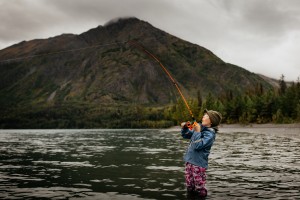
Do you remember the first fish you ever caught? If you do, you likely remember who you were with, where you were and what kind of fish you caught. Or maybe you were too young to remember. Either way, someone helped you catch your first fish. Whether it was a family member or a friend, someone introduced you to fishing and inspired a lifelong passion for spending time on the water.
As you make plans to go fishing this year, be sure to invite someone to go with you. It could be someone who has never gone fishing, or it could be someone you’ve fished with many times. Fishing is an activity that is best experienced with others. It is something that is passed down from one generation to the next.
We recently compiled a collection of images of some of our division staff showing fishing pictures from the past and some more recent images. We posted the collection on some of our social media platforms. Now, we’d like to invite you to do the same. Check out the “Share Your Then and Now Fishing Photos!” article below to learn more.
Before you head out, be sure you have your 2025 sport fishing license. Visit our online store if you need to purchase one. Or download the ADF&G mobile app and you can store your licenses, tags and permits in your mobile device.
If you have a comment or story ideas for Reel Times, we encourage you to send them our way. You can send comments to ryan.ragan@alaska.gov.
See you on the water.
Share Your "Then and Now" Fishing Photos!
By Katelyn Zonneville, R3 Coordinator
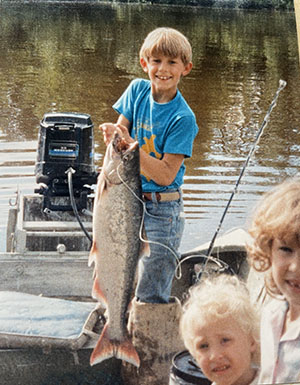
Israel Payton
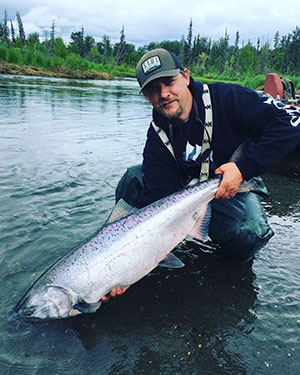
Sport Fish Director
We recently asked some of our Division of Sport Fish staff to share photos from their past and present fishing adventures so we could share them on our social media platforms. It was amazing to see how the passion of fishing has been carried forward throughout the years. Most staff who turned in photos were also excited to share the story that accompanied the photo from their past. These stories offer a glimpse into how fishing has shaped their lives, sparked their passion for conservation, and for some, connected to the water they now manage. Be sure to take a look and enjoy the memories they’ve shared!
Check out this Instagram Post. You’ll also find it on Facebook.
Now, we want to see your photos! Post your “Then and Now” photos on Facebook or Instagram. Tag us on Instagram @adfg.sportfish.southcentral and use #ADFGThenAndNow, Follow our page for updates.
Let’s celebrate the love of fishing and the memories we’ve made along the way. The deadline to post a photo is April 3. Good luck!
Everyone who sends a then and now photo will go into the running for a Browning Midas ultralight graphite spinning rod, and a small tacklebox pre-loaded with spinners great for trout and grayling. It’s time to get back outside fishing! Photos will be displayed on our social media accounts and used in various publications. Feel free to share a story to accompany your photos.

Taylor Cubbage

Fishery Biologist
Last month “Reel Times” featured an article that discussed continuing the tradition of sport fishing with the next generation, but what about ourselves? Studies show that 87% of adults that fish today started fishing when they were under the age of 12. Participation rates drop once a person reaches the age of 18. When was the last time you went fishing? Did you fish as a child? The number of studies conducted on the benefits of spending time outdoors and outdoor recreation are staggering, and they all have the same conclusion, being outside is good for you! So, why do we stop fishing? Is it lack of time? As life becomes busier with work, family responsibilities, and other commitments, people may struggle to find time to fish. Besides time, there are other factors in play that can stop people from fishing as adults. Maybe you have the time to fish, but not the equipment or resources? Not everyone has access to good fishing locations, especially if they live in urban areas. Additionally, fishing requires specific gear (rods, reels, bait, etc.), and the costs or upkeep of equipment can deter people from continuing their hobby. Regardless of the reason you have not continued to fish, maybe it’s time to get back out there!
Nostalgia is defined as “a sentimental longing or wistful affection for the past, typically for a period or place with happy personal associations”. Reminiscing can be a powerful motivator to get people back out fishing and on the water, it taps into memories of simpler times spent by the water with family and friends. Many people remember fishing as a notable activity from their childhood or earlier years, whether it was a quiet morning with family, an adventure with friends, or the time they caught the big one. Think back of a fun fishing trip you had growing up. Was it the smell of fresh air, the company, sounds of the water, or the thrill of a fish on the line that was the best part? These memories remind people why they fell in love with fishing in the first place. By reflecting on the good times that fishing once offered, are you inspired to return to the water, not just to catch fish, but to recreate those memories? Share your story!
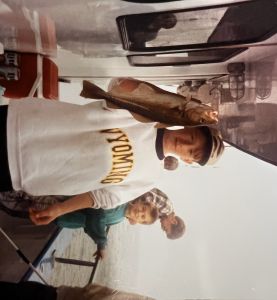
Ryan Ragan
Program Coordinator
Follow us on Instagram @adfg.sportfish.southcentral
Follow us on Facebook ADF&G – Sportfishing Southcentral Alaska
Two Youth Anglers Recognized for Catching Trophy Burbot
By Tim Mowry, Region III Information Officer
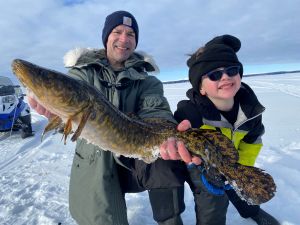
Eli and Greg Hough with 11-pound burbot from Lake Louise
It appears burbot are on the bite.
The Fairbanks ADF&G sport fish office received two applications from youth anglers for trophy burbot in the past week – one caught in the Tanana River in Salcha and one caught in Lake Louise south of Glennallen.
Six-year-old Eli Hough pulled up a 34 ½-inch burbot from Lake Louise on Tuesday, March 11. The fish weighed 11 pounds, 2 ounces. The minimum weight for a trophy burbot is 8 pounds. Hough was on a guided trip with his parents, Remy and Greg, when he hooked the fish.
“It was the most memorable moment,” Eli’s mom, Remy, said by phone. “I’m a proud mama.”
It’s the biggest fish of Eli’s young fishing career and he’ll have a trophy certificate to hang on the wall.
“We had no idea it was a trophy or that the trophy fish program even existed,” Remy said. “The guide said you have to stop the Palmer ADF&G office to get it weighed. We were driving right by the office on the way home (to Soldotna) so we stopped in and they weighed it.
“It was a complete surprise,” she said.
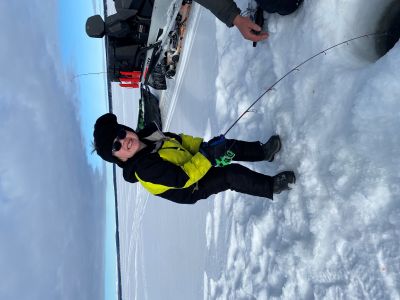
Eli Hough burbot fishing Lake Louise
The Houghs cooked up some fried and baked halibut with their catch. “It was delicious,” said Remy.
The second trophy burbot application came from 14-year-old Uriah Pickett of Eagle River, who pulled up a 9-pound, 2-ounce burbot from the Tanana River in Salcha, about 40 miles southeast of Fairbanks. The fish measured 35 ½ inches.
Pickett was fishing with his parents, Zach and Tara. Both Zach and Tara attended the University of Alaska Fairbanks more than 20 years ago and they return each spring to take in the World Ice Art Championships and go burbot fishing, not necessarily in that order.
The Picketts dropped by the Fairbanks ADF&G office to see if the burbot met the trophy requirements and it did with more than a pound to spare. Uriah will receive a Trophy Fish certificate for the catch.
During his days at UAF more than 20 years ago, Zach Pickett didn’t have much luck fishing for burbot.
“I was young and poor and only had a hand auger so I could only drill a couple of holes, which made it hard,” he said.
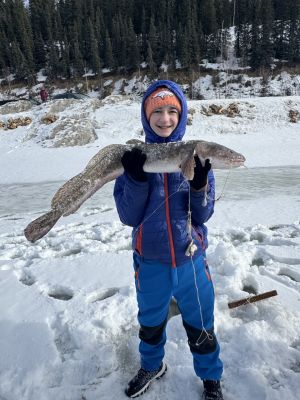
Uriah Pickett trophy burbot 2, Tanana River near Salcha, March 15 2025
These days, Pickett owns a power auger, which allows him to make multiple sets. “I’ve finally figured it out since my days at UAF,” Zach Pickett said of burbot fishing. “We had 18 sets out and caught six burbot over three days.
“It wasn’t fast and furious, but it was worth it,” he said, adding that they used lamprey eels and herring for bait.
Uriah didn’t have much to say about his trophy catch but he said he knew it was a big fish as soon as he started pulling it up. And the smile on his face as he held up the fish on the Tanana River ice spoke volumes.
The Picketts planned to cook up some poor man’s lobster with their catch.
Summer Job Opportunities in Southeast Alaska
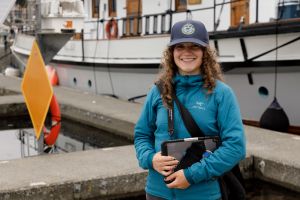
If you love the great outdoors and are passionate about Alaska's fisheries, the Alaska Department of Fish and Game has an exciting summer opportunity for you! The Marine Sport Harvest Survey, also known as the Creel Program, is looking for energetic, self-motivated individuals to join our crew and help collect important data that supports sustainable fishery management across Southeast Alaska. As a Fish and Wildlife Technician, you’ll work independently while engaging directly with anglers at harbors and boat launches, gathering valuable information about their fishing trips, catch, efforts, and collecting biological samples. No experience? No problem! ADF&G offers training to ensure you're ready for this impactful role, and you'll dive in and get hands-on fisheries experience right away! It’s a great way to start building your resume.
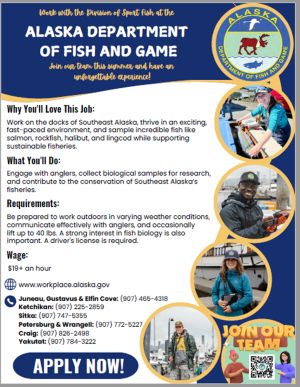
Whether you're a local Alaskan or someone looking to spend your summer working in Alaska, this is the perfect opportunity to gain experience and make a difference! You’ll work in scenic locations like Juneau, Yakutat, Sitka, Ketchikan, Petersburg, Wrangell, Gustavus, Elfin Cove, and Craig, all while interacting with the public and helping ensure Alaska’s fisheries remain healthy for generations to come. Whether you're interviewing anglers, sampling catch data, collecting biological samples, or simply providing helpful information, this is a fantastic chance to gain valuable experience in fisheries management while enjoying Alaska’s natural beauty. Don’t miss out on this chance to make a real difference - apply now and help support the future of Southeast Alaska’s fisheries!
If you want to hear from some of our past Creel Samplers, check out this list of videos on our YouTube channel.
Strong Measures to Rebuild Gulf Chinook Salmon
By Doug Vincent-Lang, Commissioner, Alaska Department of Fish and Game
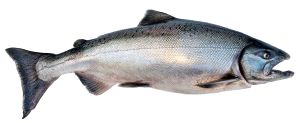
The Alaska Department of Fish and Game (ADF&G) is taking strong measures this year to rebuild one of Alaska’s most prized fish species – Chinook, otherwise known as king salmon. Although concerns regarding king salmon populations exist throughout the state, the management measures will specifically focus on the Gulf of Alaska region.
Over the past several years, sport, personal use, and commercial fishermen for king salmon in Upper Cook Inlet have experienced restrictions. This year these restrictions will be expanded to rebuild these runs. ADF&G recently issued several emergency orders restricting sport fisheries in fresh and salt waters throughout Southcentral Alaska. We have also issued emergency orders implementing restrictions in state-managed commercial salmon fisheries which include fisheries that do not target, but could possibly intercept king salmon.
We are working with our subsistence users to find ways to better manage their uses to practice culture and secure food while maintaining a sustainable resource. We will soon issue emergency orders to restrict Kodiak, Chignik, and Alaska Peninsula area sport, subsistence, and commercial fisheries to conserve weak king salmon stocks. In these areas, we will be implementing restrictions to marine and freshwater fisheries, including reductions in marine sport fishery bag limits, closing sport fishing in freshwater, closing subsistence fishing in areas that could encounter king salmon, and instituting measures to reduce king salmon harvest in commercial fisheries.
These management decisions are not made lightly. ADF&G recognizes the tremendous hardship these restrictions will bring to users, whether they be sport, commercial, or subsistence users. Closures and restrictions of fisheries are never easy decisions to make. While difficult, we hope that the actions taken today will help restore healthy populations of king salmon for the future.
Why are we taking these actions?
Over the last several years, Alaskans have witnessed our king salmon runs continue their downward trend of productivity, largely related to changing conditions in the ocean. Quite simply, for many Gulf of Alaska rivers there have not been enough king salmon to meet escapement goals designed to provide for a sustainable future AND allow for harvest opportunity.
ADF&G is investing substantial resources to investigate the decline of king salmon to understand the root causes for the change in these populations. These include a suite of studies ranging from juvenile tagging to disease assessments to genetic catch composition to marine ecosystem surveys.
Some Alaskans want to direct blame on trawlers who catch king salmon as bycatch and others blame hatcheries. The decline in king salmon, however, cannot be attributed to one specific issue. While a contributing factor, bycatch is not the sole culprit. In fact, the research frequently points to factors beyond ADF&G’s direct control, like poor marine conditions and survival, changes in freshwater temperatures, and predation. The truth is we have yet to determine the exact cause. Towards this end, we are asking the legislature to fund additional research on Gulf of Alaska king salmon and the marine waters they inhabit to further unravel the causes.
While there will be limited angling opportunities for king salmon this year throughout the Gulf of Alaska, we encourage you to turn your attention to more abundant runs of salmon. The recently released forecasts for Cook Inlet and the Copper River show an expected high number of sockeye salmon returning to rivers this summer. Large numbers of sockeye returned to Cook Inlet waters last year, and many people were able to take advantage of exceptional fishing opportunities to feed their families.
Also, ADF&G stocks several locations throughout Southcentral annually with king salmon smolt to create opportunity for anglers. Hatchery-enhanced locations will be open to fishing for king salmon. Make plans to fish for king salmon at Ship Creek, the Eklutna Tailrace, or the Nick Dudiak Fishing Lagoon in Homer. The Kasilof and Ninilchik Rivers will open to the retention of hatchery-reared king salmon with limited restrictions in place. Contact your local ADF&G office for more information.
Whether you’re an avid sport angler, personal use fisherman, or you utilize the state’s resources as a subsistence user, we encourage you to participate in fishing with family and friends. Teach the next generation how to be responsible stewards of the resource and take them fishing.
We want to assure the public that we are doing everything possible to address the decline of king salmon in Alaska. As painful as they are, we are taking restrictions today to ensure that salmon fishing continues to be a cornerstone of Alaska’s culture and economy.
King salmon are a resilient species of fish. We’ve seen king salmon abundance go through downturns and recover. Through proactive management of the species, we hope to one day return population numbers to the level they once were.
For more information and to learn more about current and forthcoming restrictions to king salmon this year, please visit this site.
Recipe of the month: Crispy Air-Fried Alaska Pollock & Chips
Enjoy this recipe for Crispy Air-Fried Alaska Pollock & Chips from the Alaska Seafood Marketing Institute.
Enjoy!
If you have any questions about the Reel Times newsletter, please contact Ryan Ragan at ryan.ragan@alaska.gov