

October 2024
Issue 82
Get Outside and Focus on Fall Fishing
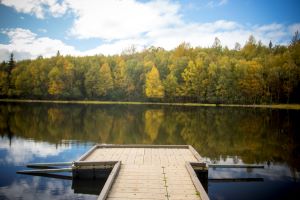
We hope you're enjoying the fall fishing season!
If you have a comment or story ideas for Reel Times, we encourage you to send them our way. You can send comments to ryan.ragan@alaska.gov.
Sampling Rockfish in Southeast Alaska
By Natasha Vandusen, Program Technician, Ketchikan
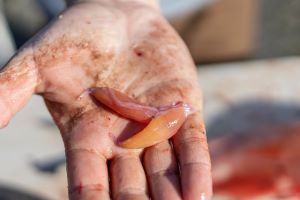
With the turn of a key, the boat roars to life as ADF&G staff prepare for a day of sampling rockfish populations in the waters of Southeast Alaska. After analyzing the chart, we have arrived at a pinnacle that looks to be favorable habitat for our targeted species. The lines are deployed 50…100…150…200 feet beneath the surface, an optimal depth for the fish we are sampling. There is a tug on the line, then another, the hook is then set. Immediately we encounter resistance as the rockfish is reeled in, but it is short lived, the line goes slack. What happened? We continue to reel the line in, and there it is – the bright orange flash as a rockfish comes to surface along with the gear. We secure the rockfish and bring it aboard. Examining the fish closer, it's a yelloweye, the focus of today's trip and just one of the many rockfish samples contributing to the ongoing research into Southeast Alaska rockfish populations.
Rockfish are long lived, slow growing, and mature later in life. This unique life history makes them particularly vulnerable to overfishing. In Southeast Alaska, ADF&G is actively working to better our understanding of rockfish size and age at maturity as well as how often and when spawning occurs. This information will be used to inform stock assessment models and develop sustainable management strategies.

For the past three years, ADF&G staff in Ketchikan, Prince of Wales and Sitka have been working to close this information gap on black and yelloweye rockfish by collecting biological samples, which include otoliths (ear bones), gonads (reproductive organs), and fish length. Samples of black and yelloweye rockfish are collected throughout the year, across geographic areas of Southeast Alaska and at various target lengths. Rockfish harvested in commercial and sport fisheries are also sampled but to complete a representative sample these focused efforts are also necessary.
Once a rockfish is caught, it is tagged, and information on depth of capture and location is recorded. The fish are then brought to shore where they are sampled by ADF&G staff. The external sex, weight, and lengths are collected before the real fun happens. The fish are opened up, the gonads are examined to verify sex, weighed and preserved in a fixative before they are prepared for histology. Finally, the otoliths are removed, and the fish is filleted for donation.
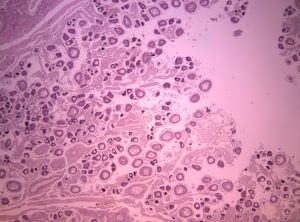
After the gonads have been preserved for at least 48 hours, they are cross-sectioned and ADF&G staff confirm the maturity stage by examining the tissue structure under a microscope. The otoliths are read at the ADF&G Mark, Tag and Age Laboratory in Juneau where staff determine the age by counting paired bands on cross-sections cut from the otolith.
The data collected for the Southeast Alaska Yelloweye and Black Rockfish Maturity project will be used to estimate the length and age at maturity to inform stock assessment models currently in development. This project is part of a Gulf-wide effort to expand rockfish research and develop long-term management strategies ensuring productive and sustainable fishing opportunities into the future.
For a visual look into this effort, check out our Southeast Alaska Rockfish Maturity Sampling video on our YouTube channel.
Fall Fishing Opportunities in the Kodiak Island Road Zone
By Kelly Krueger, Fisheries Biologist, Kodiak
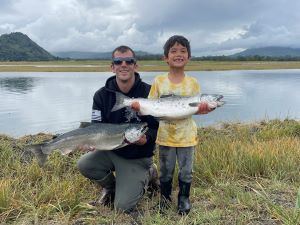
Cottonwood leaves are turning brilliant shades of yellow and slowly falling from the trees. It is October on Kodiak Island. The fall season provides plentiful freshwater fishing opportunities for coho salmon and stocked rainbow trout.
Coho salmon fishing season is a favorite time of the year for many anglers. Coho salmon provide action-packed fishing with their aggressive nature and aerobatic fights. On Kodiak, the coho salmon run typically starts in mid-August and continues through October, with most runs peaking in mid-to-late September. In recent years, bright coho salmon have been seen entering freshwater streams as late as November. There are 22 major fishable drainages that are road accessible within the Kodiak Island Road Zone. Anglers typically target coho salmon on the Buskin, American, Olds, and Pasagshak rivers. Lake Rose Teed, which borders the Pasagshak State Recreation Area and is drained by the Pasagshak River, provides a unique opportunity for anglers with access to small watercraft, kayak, or float tube. Other popular locations include the stocked runs at Monashka and Pillar creeks, Mill Bay, and Mission Beach. In addition, Saltery River is popular for those with ATV access.
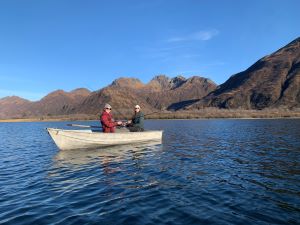
Coho salmon prefer slower moving waters and areas with plenty of cover. Early mornings can be very productive as it is cooler and there is less fishing pressure. Coho salmon will hold near the stream mouths until significant rain events occur. Try fishing after a flooding event when coho are pushing upstream. For spin fishing, coho salmon will usually strike at bright and flashy lures, especially Vibrax spinners in size No. 4 or 5. Green, blue, purple, pink, and orange are popular colors. For fly fishing, a purple egg sucking leech is a favorite among anglers, along with bright colored flies and flashy streamers. The key to freshwater coho salmon fishing is being flexible. If coho are being finicky, try changing colors, switching to a green or pink Pixie, or try using bait.
If the coho aren't biting, fishing for stocked rainbow trout is a great alternative. To provide additional angler opportunities, rainbow trout are annually stocked in 17 local Kodiak lakes and are available to anglers year-round. Rainbow trout fry are released into lakes during the summer and quickly grow to catchable size. Whether you are looking to fish a roadside lake or a more secluded lake that requires a short hike, ATV, or marine boat to access, the stocked lakes offer opportunities for every angler. Lakes can be fished from shore, by personal watercraft, or on the ice in winter months when safe conditions exist. The fall is a great time to fish stocked lakes in the Road Zone, as rainbow trout typically continue to be aggressive feeders until there is a hard freeze. For spin fishing, anglers commonly use small Vibrax or Mepps spinners, or Pixee spoons. Sizes 0-3 are common. For fly fishing, anglers find success with small egg patterns or flies that imitate the hatch. Fishing for stocked rainbows with a light-action rod can be exciting and fun for the whole family!
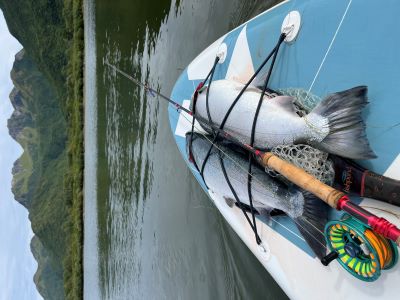
For a complete list of Kodiak Island Road Zone lakes stocked with rainbow trout, check out gofishak. On the website, you can filter by species, which will then show all rainbow trout stocked locations and give more information on tackle, how to access the lake, and other lake specific details. Maps of each stocked lake with directions and the recent stocking history are also available on the Alaska Lake Database and at the Kodiak ADF&G office.
Coho salmon and stocked rainbow trout fishing in the Kodiak Island Road Zone can be very rewarding during the cooler, crisp fall days. If the fish aren't biting, switch up your location, try a different tackle option, and be prepared for an exciting fight!
Family from Hawaii finds success through ADF&G Rod Loaner Program
By Tim Mowry, Information Officer, Fairbanks
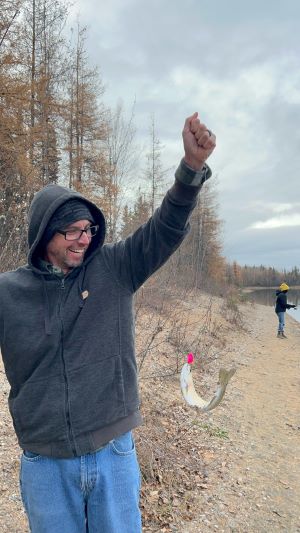
David Kim brought his family to Fairbanks from Maui, Hawaii for two things – to see the northern lights and go silver salmon fishing in the Delta Clearwater River.
They did indeed see the northern lights, as they were treated to a brilliant aurora display on their way home from Chena Hot Springs Resort on one of their nights.
As for silver salmon fishing in the Delta Clearwater River, well, that didn't quite work out.
"I found out it was closed when I got here," said Kim, alluding to the fact that silver salmon fishing in the Tanana River drainage, which includes the Delta Clearwater, was closed by emergency order because of a sub-par coho run.
So the Kims switched to plan B. They did a quick Google search and found information on ADF&G's free Rod Loaner Program. Then they went to the ADF&G website and David did a search for stocked lakes and found the Tanana River Drainage Stocked Lakes Fishing Guide.
"I pulled up the PDF of the stocked lakes fishing guide and it showed that (ADF&G) stocked trout and landlocked salmon in Chena Lake so I said, 'Let's go there.' "
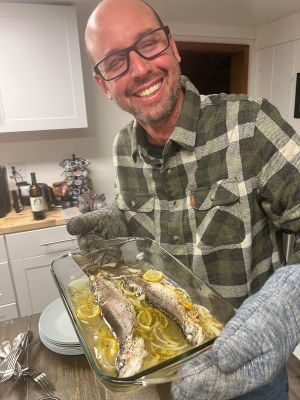
The Kims stopped in at the Fairbanks ADF&G office to pick up seven rods, got a few pointers, bought a jar of salmon eggs and headed out to Chena Lake. "It was 28 degrees out there," Kim said. "We're from Maui; we aren't used to that."
But the hardy Hawaiians were not deterred by the cold temperatures or the snow that started falling as they were fishing. Their efforts were rewarded in the form of about a dozen rainbow trout and landlocked king salmon that they caught in six hours of fishing. Kim's 4-year-old son, also named David, even caught a rainbow that his father captured on video. They even kept two of the bigger rainbows that his brother-in-law, Jon, cooked up that night.
"We had a great time," the elder Kim said. "It was well worth it."
Indeed, the Kim family had quite the Alaska experience. Not only did they get to see the northern lights and go fishing, but their Airbnb was also a big log cabin that Kim's mother-in-law, Marla, rented and they narrowly missed hitting three moose on their way out to Chena Hot Springs.
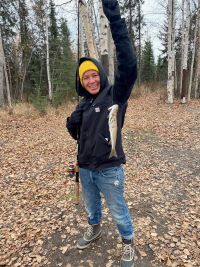
"One of the moose literally threated its way between my brother-in-law's car and my car," Kim said. "It was so close."
In the end, the close call with the moose just added to the trip.
"We came to Alaska for two things: to see the northern lights and go fishing and we did both," Kim said. "It was a great trip.
Last Day to Submit Photos for Contest is October 31
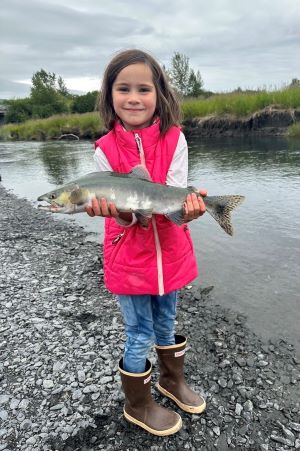
The Alaska Department of Fish and Game (ADF&G), Division of Sport Fish is now accepting photo submissions for the 2025 Sport Fishing Regulations Summary Cover Photo Contest.
ADF&G publishes four separate sport fishing regulation summary books each year for the Northern, Southcentral, Southeast, and Southwest regions. Each regional book features a cover with photos submitted by the public of their kids, families, or friends. The submission deadline for photo entries with a completed and signed media consent release form is 5:00 p.m., Thursday, October 31, 2024.
A maximum of three photos may be entered. The photos must have been taken in Alaska in the past year or two. Photos submitted without a media consent release form will not be accepted. The media consent release form must be signed by the parent or guardian of children under 18 years of age. Are you submitting a photo of your kiddo with their friends? Please make sure their friends' parent or guardian also submits a signed media consent release form, or the submitted photo will not be accepted.
Photos that show evidence of fish and game violations, unethical, or unsafe actions or advertisement will not be considered - this includes youths in a boat without a life vest.
Your email should include the anglers' first and last name, age, species of fish, and the name of the waterbody the fish was caught. Please include as attachments the signed media release form and up to three photos. Please email the appropriate regional contact below based on where your photos were taken.
- Northern Alaska: Tim Mowry in Fairbanks, tim.mowry@alaska.gov
- Southcentral and Southwest Alaska: Katelyn Zonneville in Anchorage, katelyn.zonneville@alaska.gov
- Southeast Alaska: Carly Lemieux, carly.lemieux@alaska.gov
Please visit our website for more information.
It’s time for Interior anglers to register their ice houses
With temperatures dropping and ice starting to form on Interior lakes and ponds, the Alaska Department of Fish and Game (ADF&G), Division of Sport Fish reminds ice anglers that any ice houses (including portable ice fishing tents) in the Tanana River and Upper Copper/Upper Susitna River drainages that are not removed daily from the ice must be registered with the department.
Ice anglers can register their ice houses by phone or in person at ADF&G offices in Delta Junction (907-895-4632), Fairbanks (907-459-7228) or Glennallen (907-822-3309).
Ice house owners will be issued a permit with a unique permit number. The ice house must have this permit number plainly displayed on the side and roof with the numbers at least 12 inches high and 1 inch wide in a color that contrasts with the background. A signed copy of the ice house permit must be kept in the ice house anytime the ice house is being used.
All registered ice houses are required to be removed from the ice no later than April 30th. Portable ice fishing tents/houses do not need to be registered if they are removed from the ice at the end of the day.
“Anglers should check ice thickness on the lake or pond they plan to place their ice houses on before doing so,” Tanana River drainage Area Management Biologist Andy Gryska advised. “This can be done by drilling holes in the ice to measure ice thickness, starting from shore and working their way farther out onto the lake or pond.”
Ice should be at least 4 inches thick to support the weight of a person, 6 inches thick to support a snowmachine, 8-12 inches thick to support cars and small trucks, and 12-15 inches thick to support larger pickup trucks. However, no ice is 100 percent safe, and ice anglers are advised to avoid off-colored snow or ice.
For additional information, contact Andy Gryska at the Fairbanks ADF&G office at (907) 459-7339 or andrew.gryska@alaska.gov; Brandy Baker in the Delta office at (907) 895-4632 or brandy.baker@alaska.gov; and Mark Somerville in the Glennallen office at (907) 822-3309.
Recipe of the month: Sweet Potato Stew with Wild Alaska Salmon
Enjoy this recipe for Sweet Potato Stew with Wild Alaska Salmon from the Alaska Seafood Marketing Institute.
Enjoy!
If you have any questions about the Reel Times newsletter, please contact Ryan Ragan at ryan.ragan@alaska.gov