
Alaska Fish & Wildlife News
July 2026
Controlled Fire Improves Habitat
Little Granite Creek Prescribed Burn
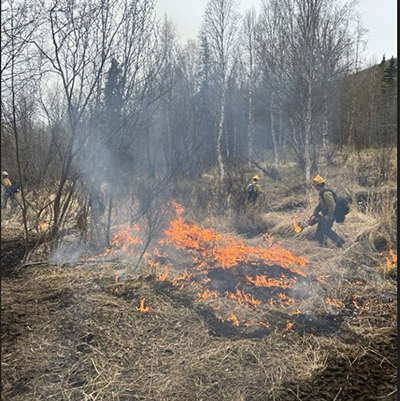
More than 300 acres of boreal forest in the Matanuska Valley Moose Range near Sutton was successfully burned in mid-May to benefit wildlife. Extensive planning and careful monitoring by fire managers and crews ensured the burn was controlled and safe.
Prescribed fire is an effective and natural tool for restoring and maintaining healthy boreal habitats in Alaska. Burning stimulates the regeneration of young aspen and other early successional vegetation. Moose, grouse and other birds, furbearers, pollinators, and other wildlife thrive as new vegetation flourishes across the treated landscape.
The boreal forest covering much of Alaska is dominated by spruce trees which are highly flammable and have evolved to burn regularly. Boreal plants, insects and wildlife also evolved in this habitat shaped by periodic wildfire. Historically, wildfires burned erratically depending on wind, weather, moisture and vegetation, creating a mosaic of young forests and shrublands with abundant browse and forage. Fire also leave standing dead trees that benefit nesting birds, insects, and other wildlife.
However, decades of wildfire suppression near roads and developed areas changed the habitat. Without periodic disturbance, forests gradually mature and shade out the young willows, aspens, and birch preferred by browsing wildlife. Prescribed burns mimic the beneficial ecological role of wildfire while allowing land managers to carefully control timing, weather conditions, smoke impacts, and fire behavior to safely achieve habitat objectives.
The Alaska Department of Fish and Game (ADF&G) Wildlife Habitat Enhancement and Spatial Analysis Program partnered with the Alaska Division of Forestry & Fire Protection (DFFP) to complete the burn northeast of Palmer in Southcentral Alaska. The Little Granite Creek Prescribed Burn is within the Matanuska Valley Moose Range in Game Management Unit 13.
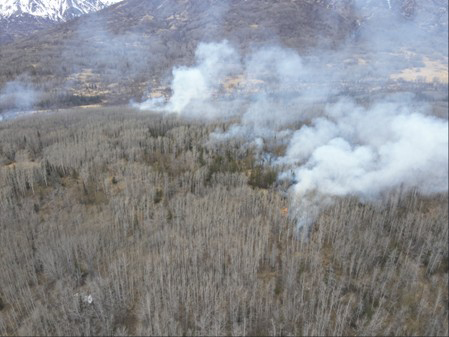
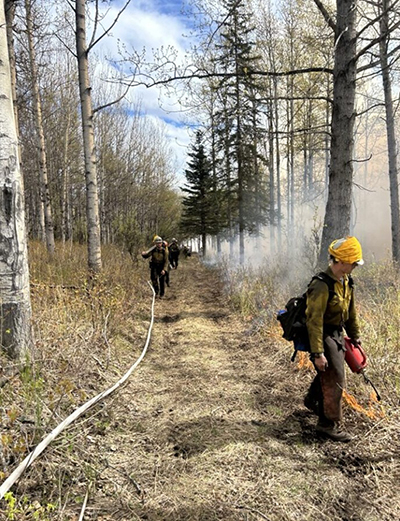
Extensive planning prior to actual ignition of the fire included smoke management coordination, cultural resource compliance, aviation coordination, wildlife surveys, and public notification efforts. Burning occurred on May 18 and 19, and on May 26 and 27. Close to three dozen people were on the site working.
Throughout the project, agency staff coordinated closely with meteorologists, dispatch centers, and air quality specialists to ensure conditions remained within prescription parameters and that smoke impacts to nearby communities, Sutton and Chickaloon in particular, were minimized. Ignitions were completed safely without any spot fires outside project boundaries, and drone-mounted infrared cameras were used during post-fire operations to monitor residual heat and confirm containment objectives.
ADFG appreciates the support and interest shown by local residents and members of the public throughout the planning and implementation of the project. Public understanding and support are critical as agencies continue working to restore fire-adapted habitats that benefit Alaska’s fish and wildlife resources.
As vegetation regenerates over the coming years, the Little Granite Creek burn area is expected to become increasingly productive habitat for moose and other wildlife species that depend on young forests and shrub communities across Southcentral Alaska.
The Little Granite Creek project represents an important milestone in rebuilding prescribed fire as a landscape-scale habitat management tool in Alaska. In addition to improving wildlife habitat, the project provided valuable opportunities for interagency coordination, operational training, and public outreach among ADFG, DFFP, and partner organizations.
More on the Matanuska Valley Moose Range
More on Wildlife Habitat Enhancement and Spatial Analysis Program
More on the Alaska Division of Forestry & Fire Protection
More on Little Granite Creek Prescribed Burn
John Wagoner is the Conservation Coordinator with the Wildlife Habitat Enhancement Program at the Alaska Department of Fish & Game
Subscribe to be notified about new issues
Receive a monthly notice about new issues and articles.