

May 2026
Issue 101
Southeast Shorelines, New Slams, Ship Creek Kings and More!
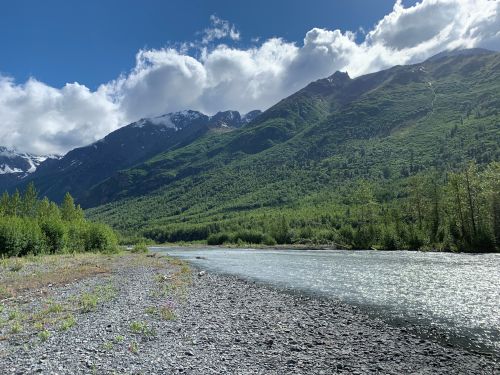
Summer fishing season is slowly getting underway across Alaska, and this month's edition of Reel Times features stories, opportunities, and updates from around the state. From the shoreside salmon fisheries of Ketchikan to the king salmon crowds lining Ship Creek, anglers are gearing up for another memorable season on the water. We also highlight new statewide Slam fishing challenges designed to celebrate Alaska's diverse sport fisheries and the anglers who pursue them.
Inside, you'll also find important information about a new king salmon permit requirement for Upper Copper River fisheries, and you'll learn how ADF&G staff are collecting data through a new Ship Creek creel survey. Whether you're planning your next fishing trip, chasing your first salmon of the season, or simply looking for a good fish story, we hope this issue helps inspire your next adventure.
Don't forget to purchase your 2026 sport fishing license and king salmon stamp. Visit our online store. Or download the ADF&G mobile app and you can store your licenses, tags and permits in your mobile device.
If you have a comment or story ideas for "Reel Times", we encourage you to send them our way. You can send comments to ryan.ragan@alaska.gov.
See you on the water.
Reeling in the Rainforest: Shoreside Angling in Ketchikan, Alaska
By Natasha VanDusen, Fish and Game Program Technician, Ketchikan Sport Fish Office
If there is one thing Ketchikan does better than rain (149 inches of rain per year on average), it's fishing! Lakes tucked just beyond your doorstep, serene shorelines, and creekside hotspots teeming with salmon, these waters offer a little something for every angler. Whether you are hiking in with a fly rod or sneaking out on a lunch break, here's what to expect from our shoreside fisheries this season.
Coast Guard Beach
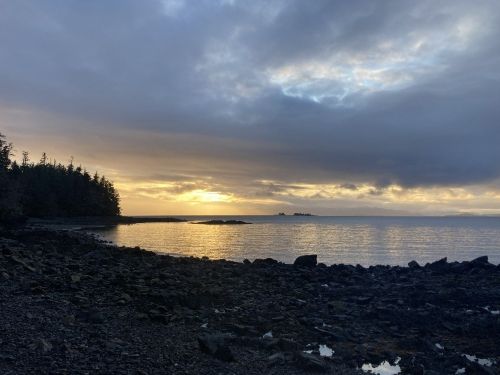
At the end of North Point Higgins Road, a short one-mile scenic hike spills out to one of Ketchikan's beloved beaches for casting. Anglers often line the shore, casting with spinners, spoons, and flies, in hopes of catching one of the many pink or coho salmon returning to the area from July through September. (Photo: sunrise over Coast Guard Beach)
Ketchikan Creek
Few towns get to brag that serious fishing happens right at their city center, but Ketchikan Creek earns the honor. This freshwater creek is a seasonal parade of steelhead, pink, coho, and hatchery king salmon. Between salmon runs, anglers using single hook artificial lures, or flies, often find feisty trout or Dolly Varden tucked in the deeper pools.
Thomas Basin
Thomas Basin sits at the heart of Ketchikan, attracting anglers eager to hook a salmon. Four salmon species pass through the basin as they enter Ketchikan Creek: king, pink, chum and coho salmon. From late June through September, Thomas Basin is one of the easiest places to fish, and one of the most exciting when thousands of pink salmon stack up below the bridge. Anglers are allowed to use two single hooks and bait, though most anglers cast spinners and spoons. For anglers that like a little variety in their fishing, keep an eye out for pelagic rockfish, greenling, and other species that cruise through the basin.
Mountain Point Shoreline
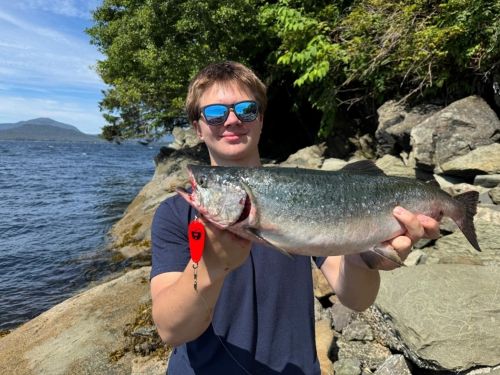
Just a short drive from downtown Ketchikan, Mountain Point is where summer salmon peaks. After parking in a gravel parking area, anglers take a short walk down a trail to a stretch of rocky shoreline. From July to September, casting for salmon can be very productive with pink salmon cruising by beginning in July followed by coho salmon into September. Anglers have also reported catching small rockfish during slack tides, just enough to keep the rod bending between salmon schools. (Photo: Buster Piazza with a pink salmon at Mountain Point)
Herring Cove
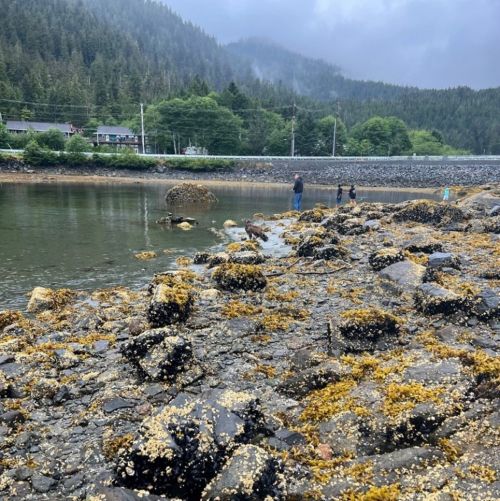
Further south on Tongass Highway, Herring Cove is a wildlife showcase wrapped around a salmon hot spot. Enhanced kings arrive in nearshore marine waters in June and July, followed by cohos in September. Here it's not uncommon to find anglers, eagles, seals, black bears, and the occasional pod of killer whales all fishing the same stretch of water. During the king salmon fishery, access is limited to low tide and fishing seaward from the ADF&G markers. When coho are returning in the fall, anglers can also fish the freshwater section downstream of the bridge. (Photo: Juvenile bald eagle, and anglers at Herring Cove)
Ketchikan's shoreline offers a wide range of fishing opportunities- whether you're looking for a quick cast, chasing salmon or trying to stock the freezer. However you fish it, these shorelines promise fresh air, exciting new fish tales, and moments that make summer here unforgettable. For more information or to plan your next trip, check out our interactive GoFishAK map!
Check Out Our New Slam Challenges!
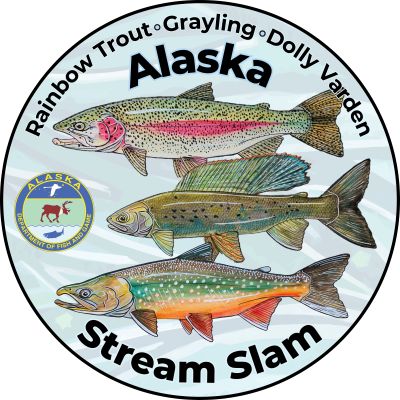
Up for a three-fish challenge?
The Alaska Department of Fish and Game Division of Sport Fish is offering three new "Slam" fishing challenges aimed at recognizing key angling accomplishments.
The "Stream Slam" awards anglers for catching a rainbow trout, an Arctic grayling, and a Dolly Varden within a 24-hour period in flowing waters in Alaska.
Catch a lake trout, burbot, and a northern pike in 24 hours from non-flowing waters like a lake, pond, or slough and you've earned the "Stillwater Slam."
For our salty anglers, we developed the "Saltwater Slam," which awards recognition for catching a halibut, a lingcod, and any species of rockfish in 24 hours.
Of course there are additional rules like fishing for these species must be conducted using a rod and reel (or hook and line), and fishing for these species must be in accordance with applicable sport fishing regulations.
In addition to bragging rights and a good fishing story, successful anglers will receive a signed certificate and a sticker corresponding to the completed challenge.
If you have questions or need advice on where to go to target each species, reach out to your local Alaska Department of Fish and Game office.
You'll find information on these and our other angler recognition programs here.
Let's make the 2026 fishing season a good one. Fish on!
New Faces at the Ditch: The Ship Creek Creel Survey
By Donnie Arthur, Assistant Area Management Biologist
For many of us anglers that frequent Ship Creek during the height of the king salmon run, we all know the familiar faces: the Ship Creek wizard who wisely wanders with his staff into the mud in pursuit of salmon, the friendly airmen that netted your fish back in 2015, and the skillful fisherwoman who you are certain tags her 5 annual limit EVERY single year. You may or may not know their names, but you see them down at the proverbial "Ditch" like clockwork every June. You eagerly wait to applaud their king salmon catch the second it hits the net, even when you yourself have not had a single bite all day. That is the culture that has cultivated in the modern-day Ship Creek fishery; hundreds of complete strangers that feel like friends rooting for each other to catch a king!
This year there will be new faces down at the Ditch. The Alaska Department of Fish and Game (ADF&G) will be operating a creel survey on Ship Creek. The purpose of this study is to estimate sport fishing effort and harvest in the Ship Creek king salmon fishery, as well as the age and size of king salmon returning. Ultimately, that data can tell ADF&G a lot about the marine survival and the number of smolt to release to give "the best bang for the buck". Additionally, understanding how Ship Creek king salmon fare in the ocean can give us a slight idea of what wild king salmon may also be experiencing while at sea.
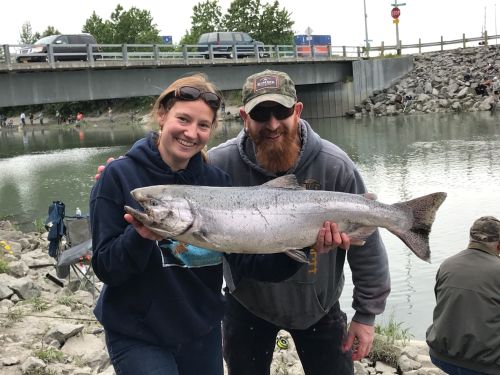
To give you an idea of what a "creel survey" is, it will help to define a creel. A "creel" is the wicker basket that anglers historically would put their catch of the day in while they continue to fish; essentially in place of a stringer, think of an old-timey wicker basket. If you have watched the movie A River Runs Through It, you have most definitely seen a creel before. As Brad Pitt's character is shadow casting on the rocks of the Blackfoot River, a creel basket is slung over his shoulder and resting on his hip. That is the premise of the Ship Creek creel survey: we (ADF&G) want to know what is in your creel basket down there and what it took for you to catch it. Most anglers nowadays don't carry wicker baskets anymore, particularly at Ship Creek, as you could imagine it would be pretty tough to squeeze 20-pound king salmon into a creel basket! Regardless, the term "creel" has stood as the industry standard for this type of catch and harvest survey since the 1800s.
The Ship Creek creel survey will include hourly angler counts along the 1-mile stretch of creek open to sport fishing. Angler interviews will be conducted each day with a few simple questions about how long you spent fishing and the number of king salmon you caught or harvested. ADF&G staff will also measure the length of harvested fish and "pluck" a few scales to determine the age of the king salmon returning to Ship Creek. Data that we would gladly share with anglers, if requested!
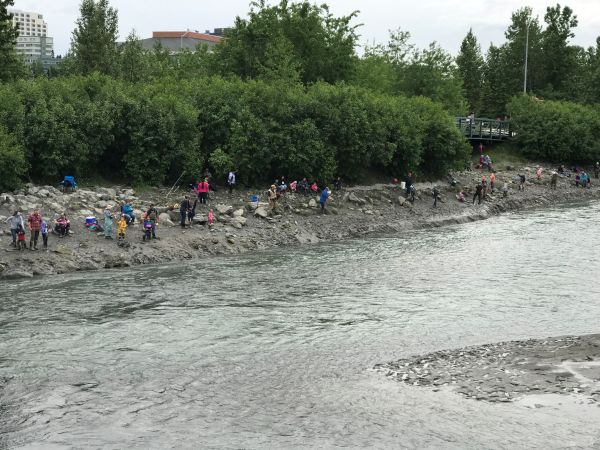
All this work will be completed by two Creel Survey Clerks who will spend nearly 50 days this summer walking the banks of Ship Creek and getting to know the fishery and the anglers that make it what it is. Above all else, the clerks are not just there to collect data. They are there to answer questions, provide information on regulations and fishing opportunities, celebrate catches with anglers, and become part of the daily culture that makes Ship Creek unique. Maybe they will even be the ones netting your fish this king salmon season! So, when you see these new faces down at the Ditch, don't be afraid to say hello, share a fishing story, brag about your catch, or offer your thoughts on the fishery. By the end of the summer, those ‘new faces' probably won't feel so new anymore.
While participating in interviews is not mandatory, the more anglers that participate, the better the information ADF&G can collect to help improve management of the fishery. After all, one of the major goals of this project is to help improve the Ship Creek king salmon fishery for the anglers that care about it most. And to sweeten the deal a little, anglers who participate in a creel interview will receive an exclusive ADF&G Ship Creek creel survey stickers while supplies last.
New King Salmon Permit Required for Upper Copper River Sport Fisheries in 2026
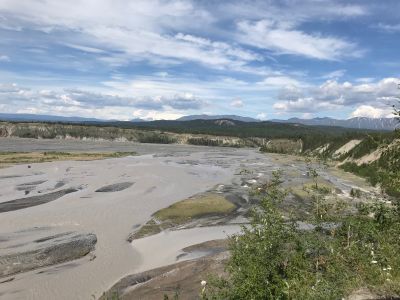
Anglers planning to sport fish for king salmon in the Upper Copper River drainage will notice a new requirement beginning in 2026. For the first time, the Alaska Department of Fish and Game (ADF&G) is implementing a free Upper Copper River King Salmon Permit for all sport fish anglers targeting king salmon in the drainage.
Upper Copper River king salmon fisheries offer anglers a unique opportunity to pursue wild Chinook salmon in one of Alaska's most scenic and remote road-accessible fisheries. Tributaries of the Copper River, such as the East Fork Chistochina, Klutina, and Gulkana rivers, offer a variety of fishing experiences including float trips, roadside and shore fishing, guided charters, and fly-in opportunities, all set against the backdrop of the Wrangell Mountains and Copper Basin.
The permit is part of a broader initiative to improve the accuracy and timeliness of Chinook salmon harvest reporting statewide. Current harvest survey estimates are often not available up to a year after the season concludes, whereas the new permit system will provide information immediately following the fishery.
"This permit will provide an important new tool for monitoring harvest during the season," said Klaus Wuttig, Region III Management Coordinator for ADF&G Division of Sport Fish. "Improving the timeliness and accuracy of harvest reporting will help support sustainable management of Upper Copper River king salmon fisheries and hopefully lead to better fishing opportunities long term."
The permit is required in addition to a valid Alaska sport fishing license and king salmon stamp (when applicable). Anglers must carry the permit while sport fishing for king salmon in the Upper Copper River drainage.
Any king salmon 20 inches or greater retained from the drainage must be recorded immediately on the permit. King salmon under 20 inches do not need to be recorded.
The new permit replaces the previous harvest record requirement printed on sport fishing licenses.
All permit holders are required to complete an online report by August 31, even if they did not fish or catch a king salmon. Reporting information will help ADF&G better evaluate participation and harvest estimates.
Permits will be available at no cost beginning May 1 and may be obtained online through the ADF&G online store and the ADF&G Mobile App.
Anglers can also monitor in-season king salmon passage at the Miles Lake sonar project, including daily king salmon counts.
Current Upper Copper River fishing reports and fishery updates are available on our website.
ADF&G reminds anglers to always check current Emergency Orders (EOs) and regulations before fishing, as king salmon regulations can change rapidly depending on run strength and in-season management needs.
Crispy Baked Alaska Pollock Egg Rolls
Enjoy your next meal with this recipe for a : Crispy Baked Alaska Pollock Egg Rolls from the Alaska Seafood Marketing Institute.
Enjoy!
If you have any questions about the Reel Times newsletter, please contact Ryan Ragan at ryan.ragan@alaska.gov