

September 2025
Issue 93
Fishing Adventures Await: Situk River Improvements, Dalton Highway Stories, and Fall Stocking
From improved access at the Situk River to a DIY adventure along the Dalton Highway, there’s plenty happening on the water. We’ve also got updates on freshly stocked Interior lakes, a new stocked lake in North Pole. Get out and fish!
Visit our online store if you need to purchase your 2025 sport fishing license. Or download the ADF&G mobile app and you can store your licenses, tags and permits in your mobile device.
If you have a comment or story ideas for Reel Times, we encourage you to send them our way. You can send comments to ryan.ragan@alaska.gov.
Access Improvements at the Lower Situk River Landing
By Matt Catterson, Southeast Alaska Access Program Coordinator
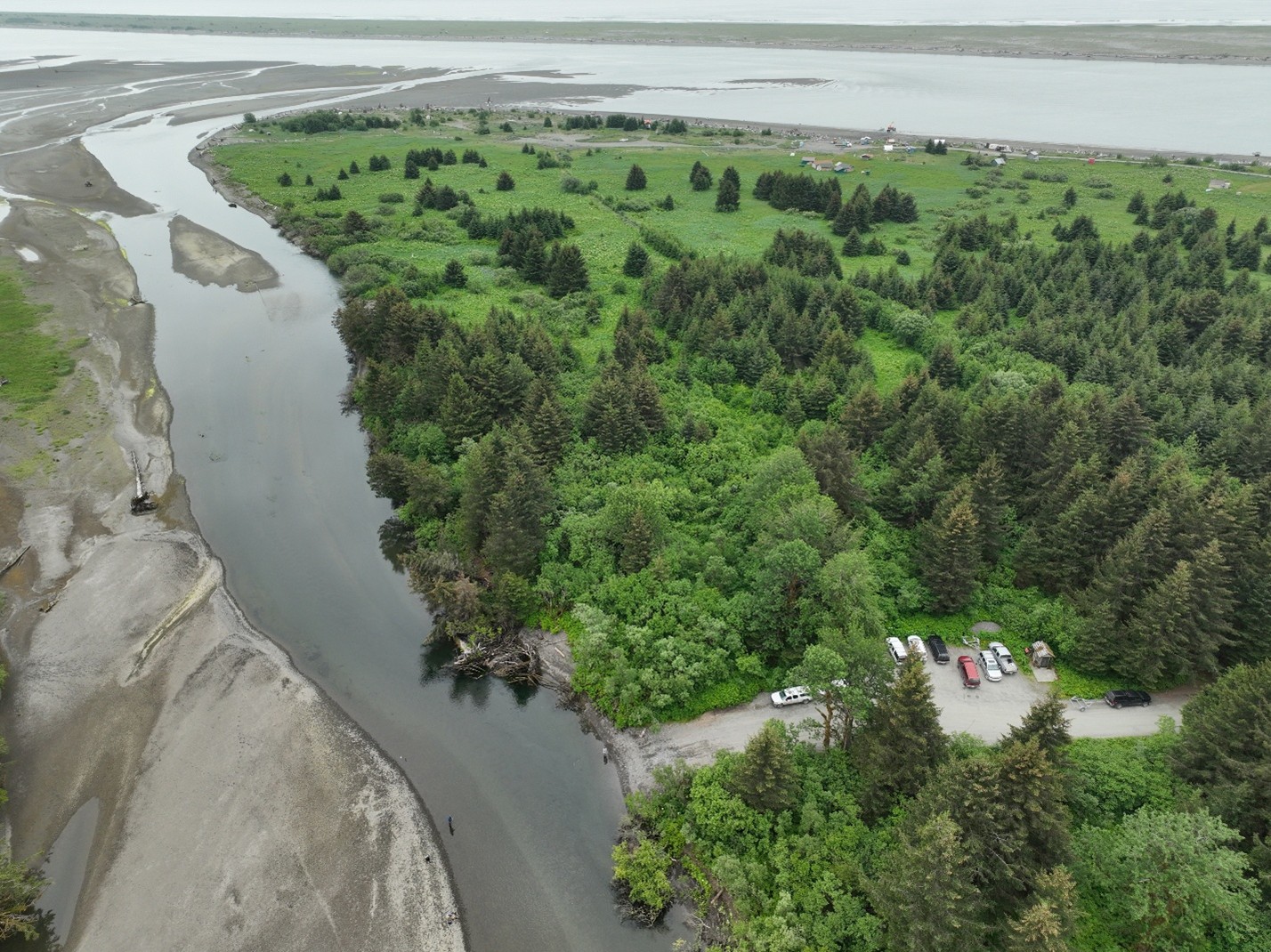
The Lower Situk River and Lower Landing access site
The Situk River, near Yakutat Alaska, is the most popular freshwater fishing spot in Southeast Alaska. Nearly 30% of all the freshwater fishing in the region happens on the Situk River. This is not only because of the incredible productivity of the Situk, as it is home to significant populations of salmon, trout, and steelhead, but also because the river is uniquely accessible to anglers on foot or in a boat. The Lower Situk River Landing, commonly referred to as the Lower Landing, is a key access location- it’s where all boats floating down the river take out and where many anglers on foot start hiking the river. It’s not uncommon for dozens of anglers to access the river here on a given day during salmon or steelhead season.
A big part of what makes the Situk River special is its undeveloped, wild character. When you visit the Situk, you escape the hustle and bustle of the modern world and are able to relax and focus on the river and fish. The Lower Landing access site fits right into its surroundings and is relatively undeveloped and rustic - many folks like it this way. Recognizing the importance of the location, the Alaska Department of Fish & Game (ADF&G), Division of Sport Fish (DSF) purchased the land of the Lower Landing to maintain public access in 2007. The vault latrine restroom at the site, which had been in place for over twenty years, was also a bit wild and was slowly being swallowed up by its surroundings- so it was time for an upgrade.
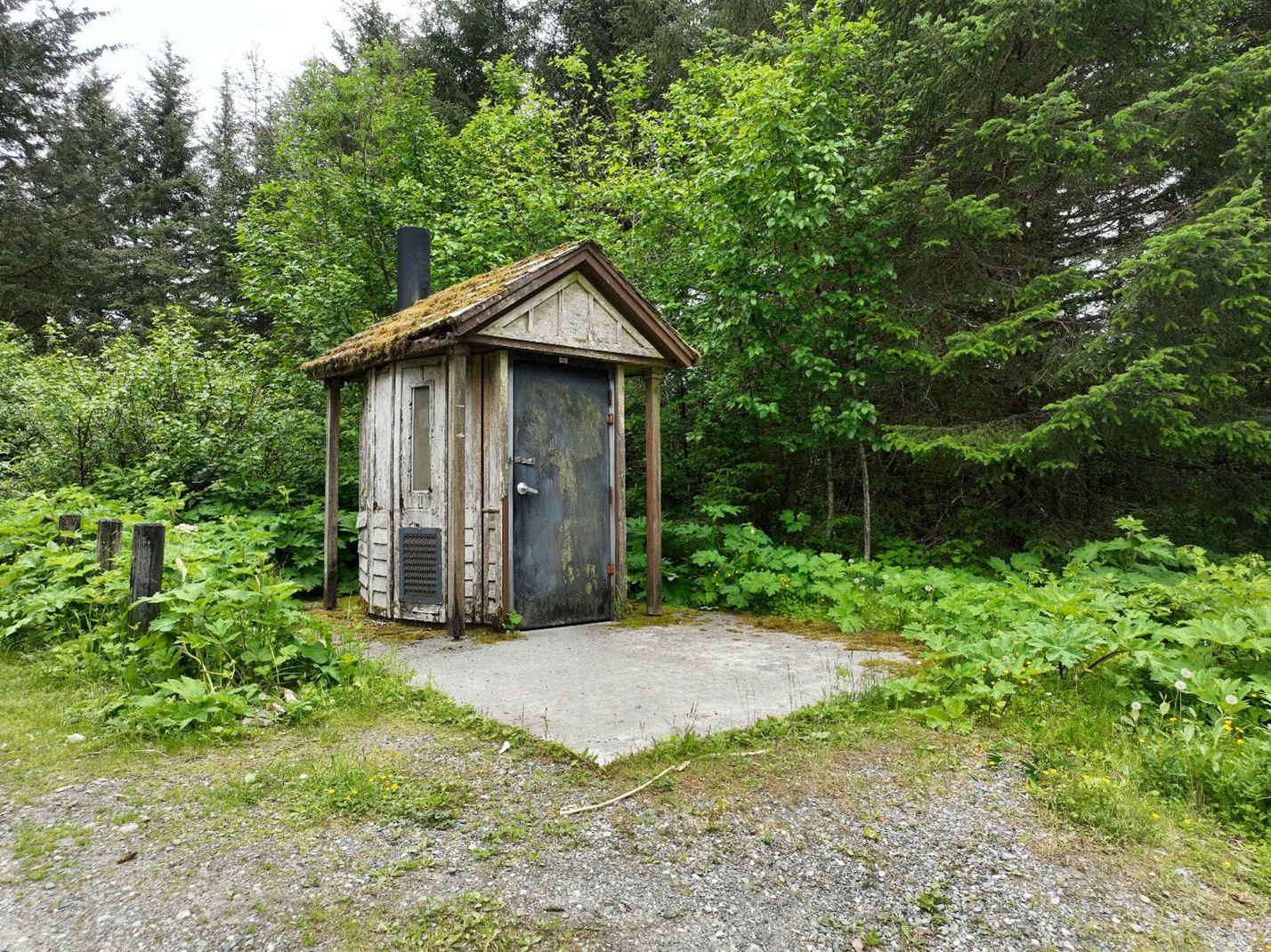
The Old Lower Situk River Landing restroom
Improvements to restroom room facilities may not be high profile or glamorous projects, but they are none-the-less critical to high quality experiences at popular fishing spots. In the summer of 2025, the ADF&G DSF Access Program worked with the Alaska Division of Natural Resources and a local Yakutat contractor to replace the existing vault latrine restroom at the Lower Landing with a modern pre-cast concrete facility. This new restroom will provide locals and visitors with a safe, clean, and functional facility, so they can focus on fishing and enjoying the area.
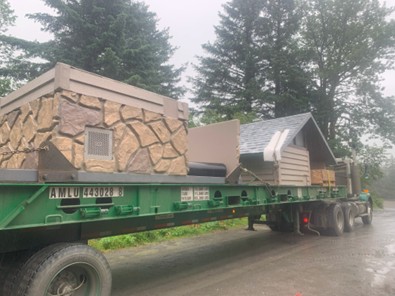
New restroom installation
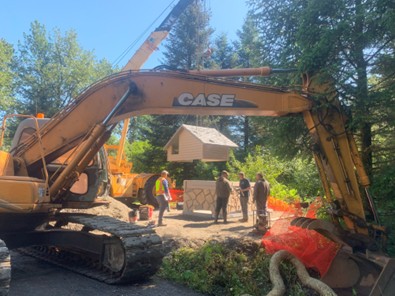
New restroom installation
Good project planning and work by the contractor led to construction being completed in just a few days, with minimal impact to anglers. Most surprisingly, the weather even cooperated by providing some light rain during excavation work which kept the dust down and aided in fill compaction, then it cleared up and got sunny, which facilitated installation and weather sealing.
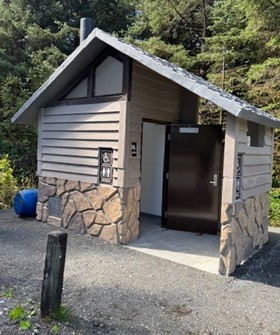
The new Lower Situk River Landing Restroom is open to the public!
These types of tangible improvements to fishing and boating access facilities are the bread and butter of the ADF&G DSF Access Program, which works to maintain and upgrade the infrastructure that helps us all get out on the water. The DSF Access Program uses federal funds from the US Fish and Wildlife Service, Office of Conservation Investment to partner with local governments and other state and federal land managers to complete these types of projects. For more information check out the program website: Alaska Department of Fish and Game Division of Sport Fish- Boating and Angler Access Program.
Over the last 38 years, the ADF&G DSF Access Program has completed more than 180 capital improvement projects across Alaska. Next time you’re at your local boat launch or access site, take a second to check the signs and see if that facility was developed through the ADFG DSF Access Program, there’s a good chance it was.
Young anglers tackle DIY fishing trip on Dalton Highway
By Tim Mowry, Region III Information Officer
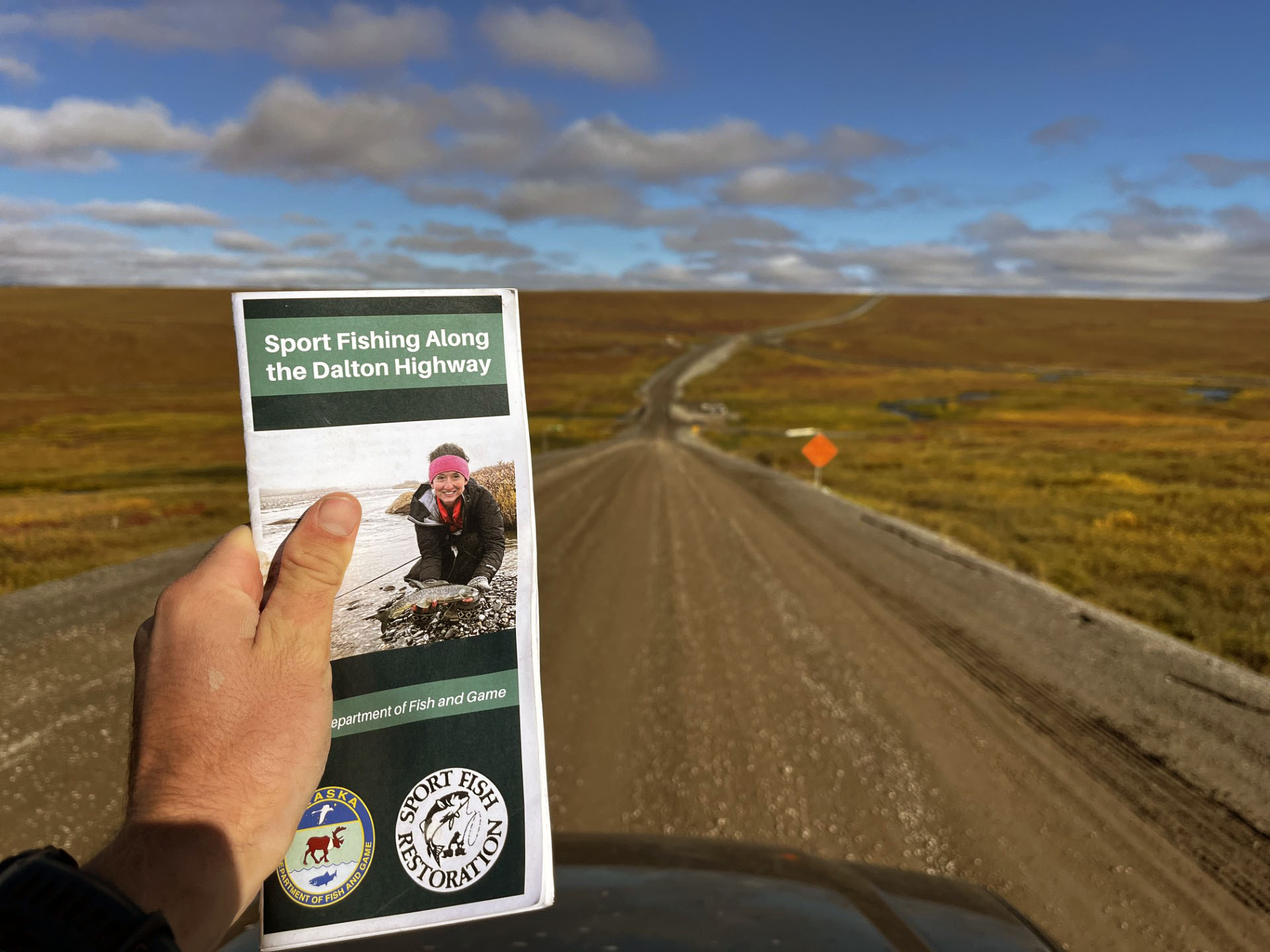
When they decided to set out on a do-it-yourself fishing trip up the Dalton Highway in late August, Cathal Mee and Jacob Rozell, both 20, didn’t know what they were getting into.
Rozell was raised in Fairbanks and had spent part of his youth prowling around in the Brooks Range on camping and caribou hunting trips but he didn’t take up fishing until two years ago, under the mentorship of Mee, his college roommate at St. Olaf College in Minnesota.
“I was born in Fort Yukon and grew up in Fairbanks, but did not fish much at all,” Rozell confided in an email. “I subsistence dip netted for salmon in Chitina, but that was all until I learned how to fly fish.”
It was Mee, who hails from Saint Paul, Minn., who taught him.
“I only started fly fishing in 2023, but did not catch a fish until 2024,” Rozell wrote. “Cathal taught me how to cast, and then we taught ourselves how to tie (flies). I went on so many fishing trips without catching a fish.”
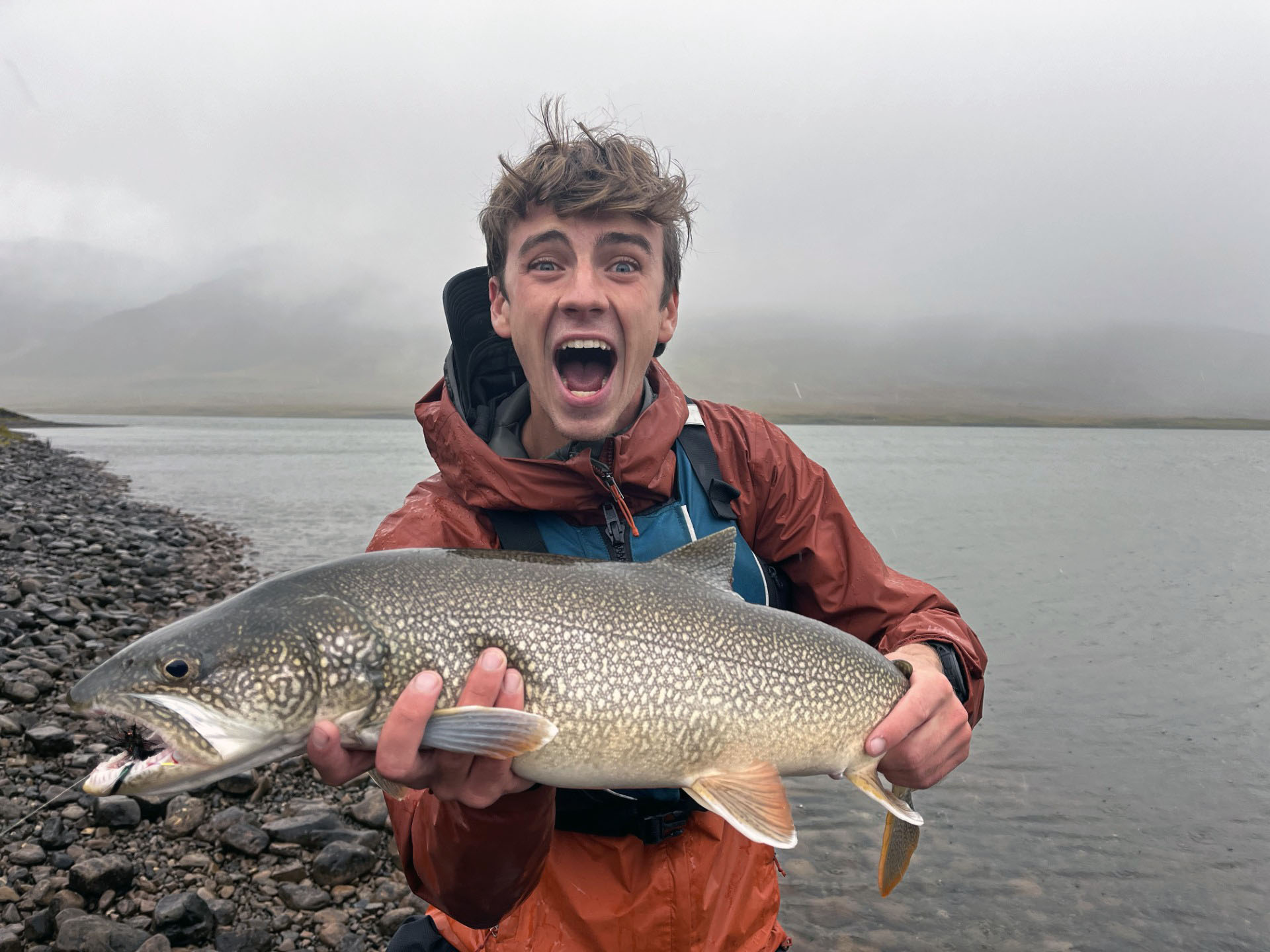
Cathal caught this 26-inch lake trout on a fly in Galbraith Lake
When Mee came up to visit Rozell Alaska this summer, rather than head south to fish for salmon on the crowded Kenai Peninsula or steelhead in Southeast, they decided to travel up the Dalton Highway and try their luck fishing for Arctic char, Dolly Varden and lake trout in the more remote Brooks Range.
“The southern steelhead run and other salmon runs, as fun as they would have been, sounded frankly, expensive to chart out from Fairbanks, and maybe out of our skill level as well,” Rozell said. “Since neither of us had fishing experience for these species, we were relying on the fact that Brooks Range fish receive less fishing pressure and therefore are more forgiving of angler misgivings.”
The chance to explore the Brooks Range and catch an Arctic char was enough to hook Mee.
“Arctic char in Alaska have been a bucket list fish for me since I started fly fishing, and we really love the adventure component of fly fishing more than actually catching the fish,” Mee said. “The allure of the Arctic (and a spawning colored Arctic char) was too much and we were excited to try and have a successful DIY trip.”
The two young anglers did some preliminary research on the Internet before stopping in at the Fairbanks ADF&G office to speak to North Slope Area Management Biologist Brendan Scanlon, who talked to them at length about fishing opportunities along the Haul Road. They also picked up a copy of ADF&G’s “Sport Fishing Along the Dalton Highway” brochure, which provides a detailed rundown of the rivers, creeks and lakes located along the Haul Road.
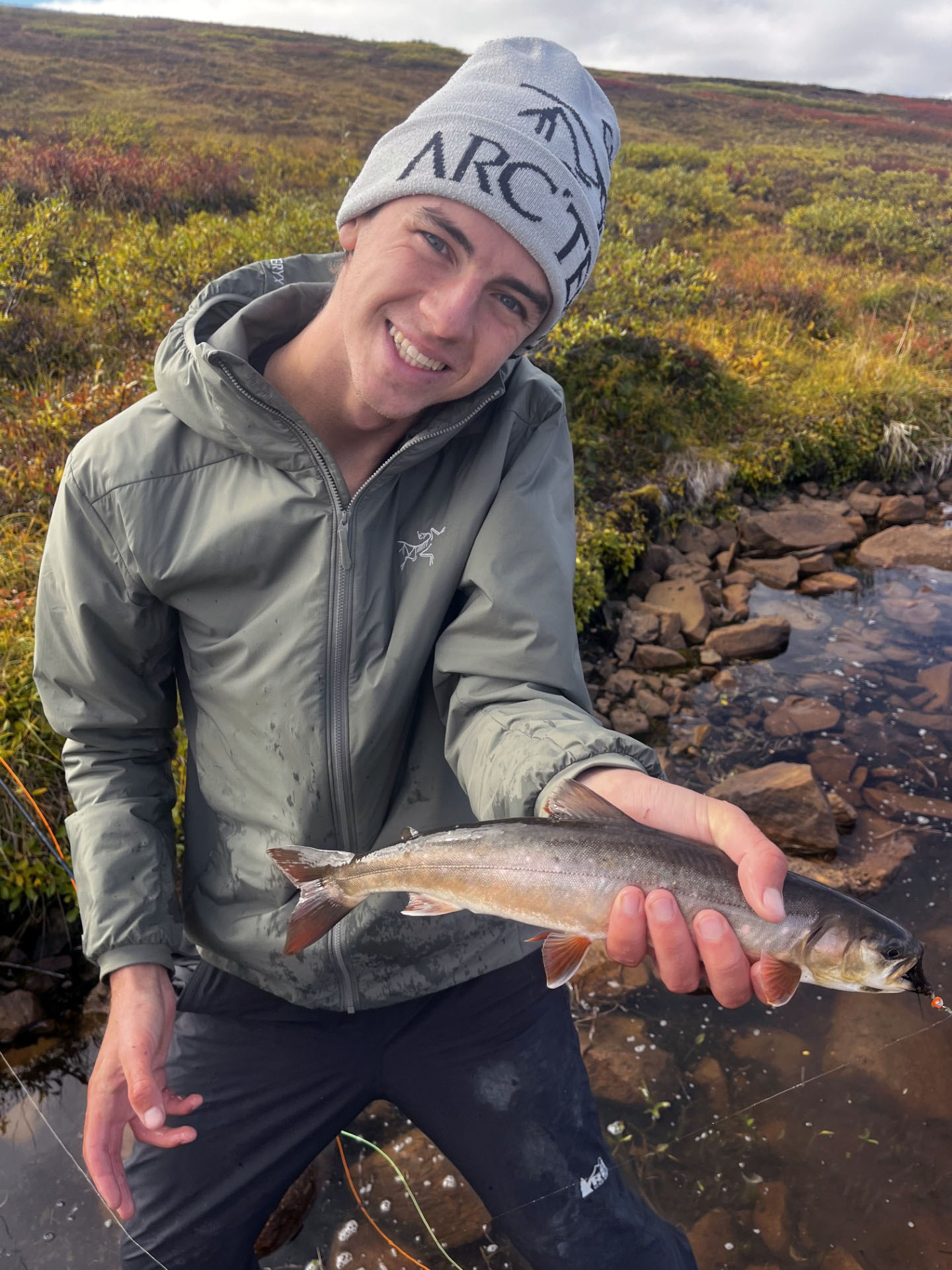
Cathal Mee with a Arctic char caught in Horizon Lake.
After two days of floating and fly fishing for Arctic grayling on the Delta Clearwater River “until our arms fell off,” said Mee, they packed up Rozell’s Toyota Landcruiser with 325,000 miles on it and heading north.
Their first stop was in Minto for a day of fly fishing for northern pike from a canoe on Minto Flats. They brought one spinning rod as a backup between the two of them but forgot to bring any hooks so all their fishing was with fly rods.
“The majority of the day we spent fishing with mouse patterns and caught 12 fish between us,” Mee wrote in an email. “It was so much fun.”
From Minto, they continued north to the Dalton Highway and Galbraith Lake at Mile 276. Torrential rainfall had rendered most of the creeks and rivers on the south side of the Brooks Range unfishable, they said.
“We bookmarked Galbraith Lake as our first fishing opportunity, and most of the streams before that were super washed out with all the rain, so we just kept driving until we hit Galbraith Lake and didn't fish anything further south,” Mee said.
While they went to the trouble of hauling a canoe and portaging it across the tundra to reach the lake, it was too windy to use the boat. Instead, they fished from shore and Mee caught a 26-inch lake trout on a fly, as well as an Arctic grayling, while Rozell caught some tiny Arctic grayling in an inlet stream.
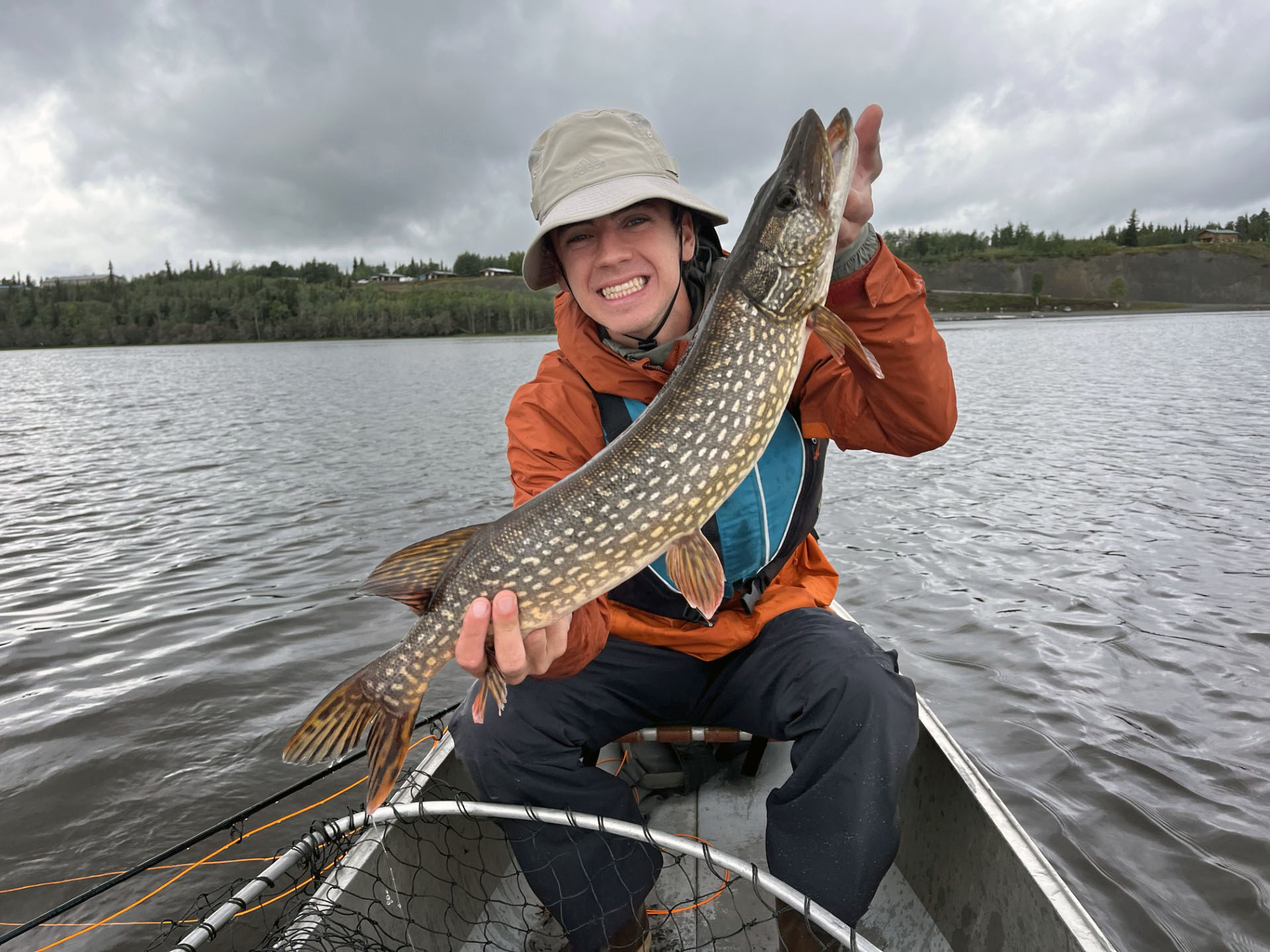
Cathal with one of a dozen northen pike he and Jacob Rozell caught in a day of pike fishing on Minto Flats.
Hooking the lake trout proved to be serendipitous, Rozell said.
“At the moment Cathal hooked it, we were talking about how discouraged and cold we were feeling and he said, ‘These fish can’t be pressured hard at all; I’m sure if we just put our flies in front of their face it’s going to be an instant bite’ and then with perfect comedic timing, there it was,” Rozell said.
“We were using a size 4 orange-headed, green wooly bugger, which proved to be our most successful pattern, as it was the fly that also caught Arctic char and pike in Minto,” he said.
The next day, they continued north and fished Horizon Lake at Mile 288 and Little Tahoe and Cut Off Lakes at Mile 298. They each caught some Arctic char from Horizon Lake but got skunked in the other two lakes. They considered traveling farther north to try fishing for Dolly Varden in the Sagavanirktok River but they were worried they were going to run out of gas – another classic Haul Road experience - so they bailed on that idea and turned around.
ADF&G’s “Sport Fishing Along the Dalton Highway” brochure was key to their success, they said.
“The pamphlet was super helpful and definitely shaped the Dalton (Highway) portion of our trip,” Rozell said. “The creeks and rivers in the book served as mileposts almost more than the actual mileposts.”
Given their experience level and lack of familiarity with both the Dalton Highway and the fish they were targeting, the trip was a big success, Rozell said.
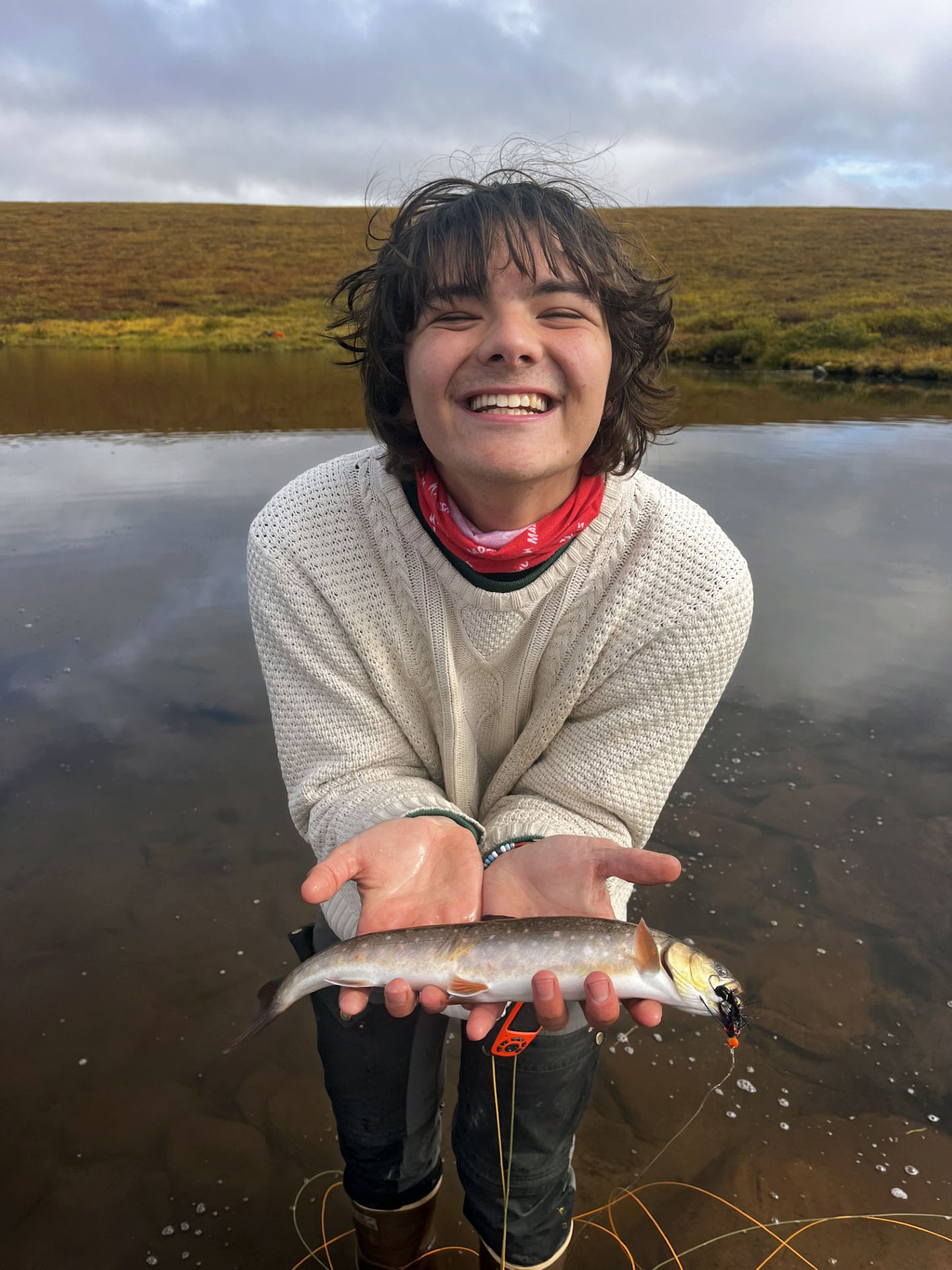
Jacob Rozell is all smiles after catching this Arctic char.
“I was pleasantly surprised at the fish we caught and the fun we had,” he said.
Even though Mother Nature conspired and the nasty weather severely limited their views, both Mee and Rozell said they feel like they experienced some of what the Brooks Range has to offer, both in terms of beauty and fishing.
“The trip was amazing,” Rozell said. “Being pressured to go further (because of the rainy weather) was a blessing in disguise. I haven't thought before that fishing in lakes was all that fun, but I grew to appreciate it as the trip progressed.”
“It was raining through the Brooks Range, which severely limited our sightlines, and you could barely see the mountains right next to the road, so we were disappointed by that but it cleared enough for us to hike a bit and see stuff closer to Galbraith Lake,” Mee said. “It was a great adventure.
“You can't beat getting $7.50 a gallon gas from Coldfoot Camp and you can't beat the feeling of being alone in the Arctic,” Mee said. “I'm missing the pipeline already after seeing it for so many days straight.”
Interior ponds and lakes stocked for fall fishing
By Tim Mowry, Region III Information Officer
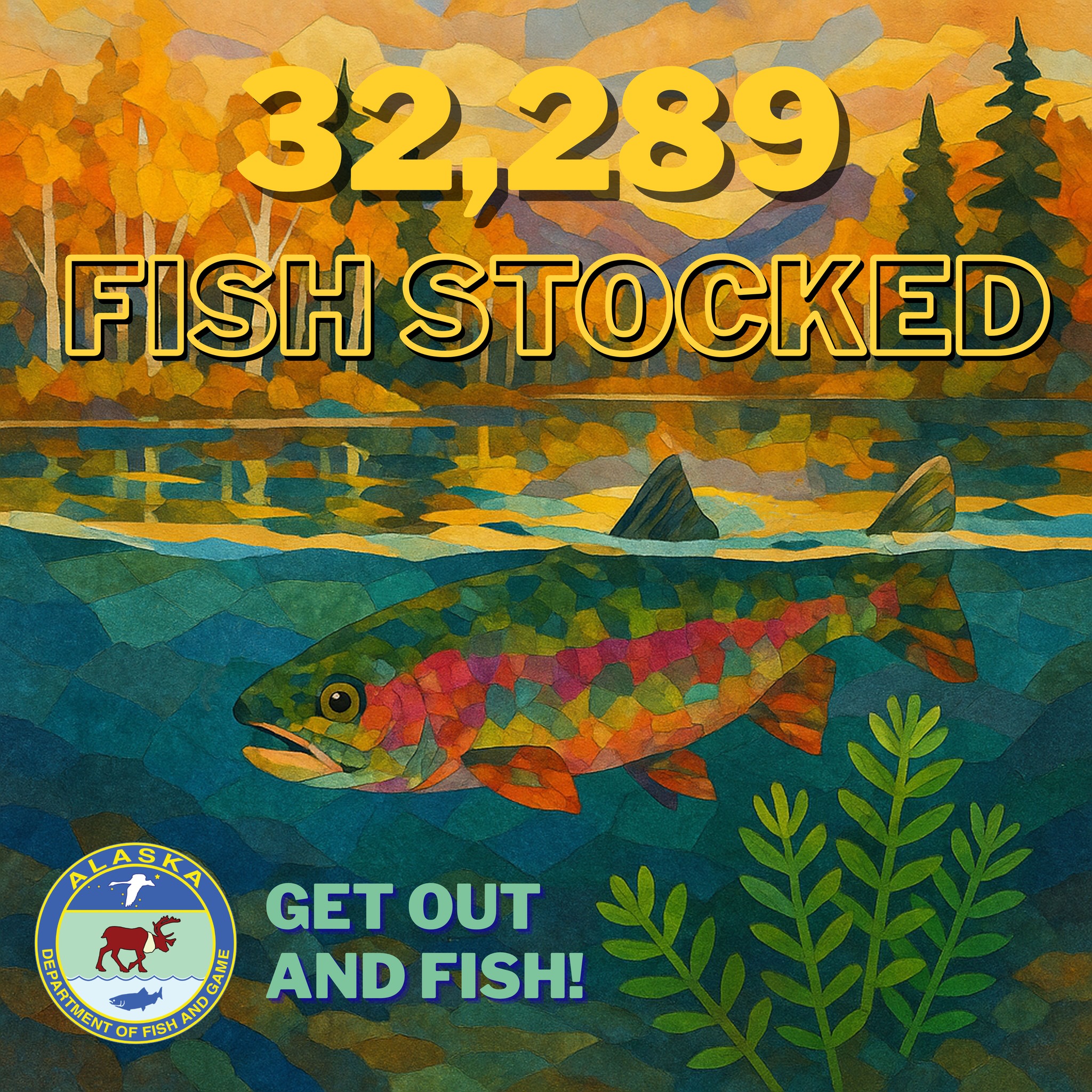
Now is the perfect time to get out and fish stocked lakes and ponds in the Interior.
September’s cooler temperatures and the emergence of the fall colors make for picturesque fishing conditions. And if that isn’t enough to get you hooked on fall fishing, consider that ADF&G recently stocked more than 22,000 catchable-size rainbow trout into
a handful of ponds and lakes in Fairbanks, North Pole and Glenallen.
A total of 32,289 fish were stocked in the past two week, including 22,131 catchable-size rainbow trout, 4,083 sub-catchable Arctic char, and 6,075 catchable-size coho salmon.
Here’s a list of lakes that were recently stocked:
- Chena Hot Springs Road Mile 47.9 Pond – 812 rainbow trout
- Chena Lake – 9,004 rainbow trout, 6,075 coho salmon
- Tex Smith Lake – 554 rainbow trout
- Old Road Lake – 380 rainbow trout
- Round Lake – 368 rainbow trout
- Pippin Lake – 2,709 rainbow trout
- True North Lake – 1,029 rainbow trout
- Cushman Lake – 4,015 rainbow trout
- Olnes Pond – 1,477 rainbow trout
- Two Mile Lake – 1,016 rainbow trout
- Birch Lake – 767 rainbow trout
- Quartz Lake – 4,083 Arctic char
To find out more about each of these lakes, as well as the number, size and species of fish put into each lake, check out the Alaska Lake Database.
You can also use our Fish Stocking Search tool to get more detailed information about stocking.
For a complete list of stocked lakes in the Tanana River drainage, check out the Tanana River Drainage Stocked Lakes Fishing Guide.
And if you need to borrow a fishing rod, check out ADF&G’s free Rod Loaner Program.
New stocked lake in North Pole offers summer and winter fishing
By Tim Mowry, Region III Information Officer
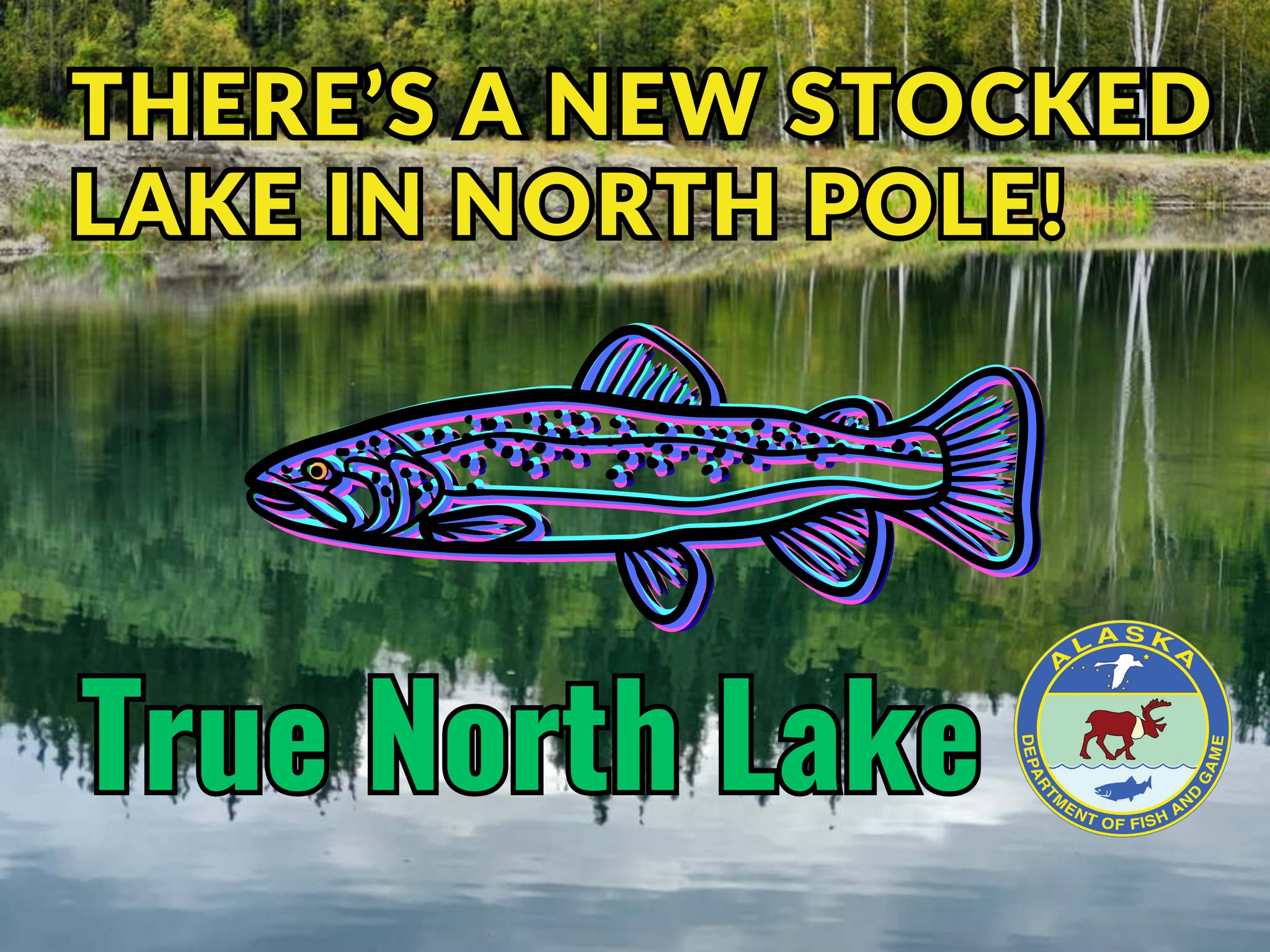
There’s a new stocked lake in North Pole.
ADF&G staff from Ruth Burnett Sport Fish Hatchery recently stocked True North Lake with more than 1,000 catchable-size rainbow trout. The lake, located off Badger Road in North Pole, was stocked for the first time on August 22.
The lake is an old gravel pit and can be accessed by turning onto Lincolnwood Drive from Badger Road and then turning onto Farmier Court. There is a publicly accessible area to fish from along the shore, as well as a public boat launch. This lake is relatively small and is perfect for fishing from canoes and kayaks.
In addition to great fall fishing, the lake should provide some great ice fishing in the winter as it is deep enough to hold fish year-round.
Alaska Wild Salmon Avocado Sandwich
Try this great recipe for Alaska Wild Salmon Avocado Sandwich from the Alaska Seafood Marketing Institute.
Enjoy!
If you have any questions about the Reel Times newsletter, please contact Ryan Ragan at ryan.ragan@alaska.gov