
Alaska Fish & Wildlife News
October 2026
Mammals and Mushrooms
How Alaska’s voles build forests with fungi
Many an Alaskan road-tripper has seen blackened hills from past wildfires scarring mountainsides and meadows, though these burned areas often host splashes of green shoots and young fireweed among the dead wood. Fire is one of the many disturbances that can clear land in Alaska, leaving bare ground open for young trees and sprouts to retake the land. But how do these new forests gain a foothold in the soil? Birds, animals, and wind spread seeds, while soil bacteria and invertebrates (like earthworms) churn through dead leaves and detritus to provide nutrients. But what role do the humble rodents play in such a grand production?
The World of Mushrooms
The role of rodents in the forest is tied to mushrooms. Mushrooms are an essential part of ecosystems. Mushrooms are the familiar capped fruiting bodies of a much larger root-like network underground called the mycorrhizae, or fungal mycelium, which helps decompose dead animal and plant tissue, recycle nutrients and pioneer new habitat.
The mycorrhiza is found in soil almost everywhere, extending for miles across a wide range of land-based habitats. It is woven into the ecology of most plant communities on earth. It is complex and diverse, including many different species of fungi, and interacts with a diversity of plant species. The network has a symbiotic (mutually beneficial) relationship with trees and grows on and around roots (ectomycorrhiza) and even inside the tree roots (endomycorrhiza). The mycorrhiza improves trees’ access to soil nutrients, including phosphorous and nitrogen, while the mycorrhiza (incapable of photosynthesis itself) gains sugars created by the trees using sunlight. Forests incorporated with the mycorrhizal network survive better in times of drought, grow more, and are more able to weather changes in the environment.
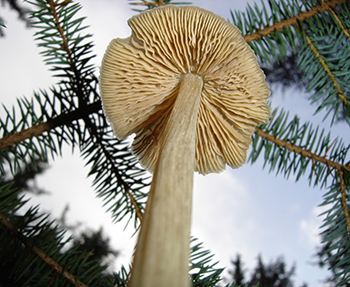
Given the immense benefit to forest health provided by the presence of diverse ectomycorrhizal fungi, the spreading of these fungal spores can be integral to the growth of new forests. Wind can spread these spores, but more crucially, so can small mammals.
The Foragers and the Fungi
Small mammals in Alaskan forests, such as voles and flying squirrels, regularly eat mushrooms and underground fruiting bodies of fungi such as truffles. These mushrooms contain spores that act as seeds of fungi and germinate once they find appropriate habitat, sprouting mycelium roots of their own. While some spores rely on wind, those eaten by rodents and distributed through scat are spread throughout the environment far more effectively. Following disturbances of forest communities, such as melting glaciers, fire, or deforestation, the mushroom spore dispersal by small mammals has been found to be one of the most important components in regenerating the forest.
Take the white spruce, one of the most common evergreen trees in Alaska, sporting sharp square needles, and growing most often in well-drained soils, providing food and shelter for Pine siskins, Pine Grosbeaks, White-winged Crossbills, porcupine, black bear, lynx, and other species. White spruce seedlings incorporated with ectomycorrhizal fungi in disturbed habitat were found to have 75% higher survival than those without. Small mammals are the main distributors of the species of fungi that are symbiotic with the white spruce, especially the red-backed vole.
Finding the Root
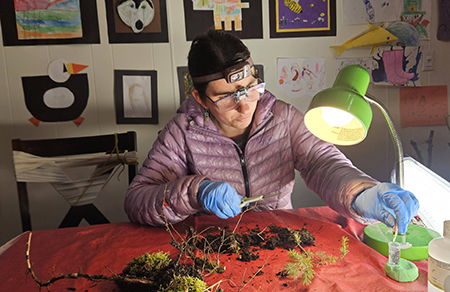
The Alaska Department of Fish and Game is running field work in Interior Alaska on these fascinating findings. Dr. Julie Hagelin and Eva Allaby of the TED Program are participating in a project from East Tennessee University assessing the ability of small mammals to disperse ectomycorrhizal fungal species that assist white spruce in particular. Voles were trapped across spruce stands so that researchers could study what species of mushroom spore they are consuming. This sort of information could be helpful to the management of forests and reveal the importance of small mammals in building new habitats. The vole diets revealed a wide variety of spore species, most of which were known to be symbiotes of white spruce. Some voles had 100,000 spores in their gut, while others had over a billion, demonstrating just how much dispersal power these small mammals can have. The little rodents seemed to be snacking on plants and berries in the spring and switch to mushrooms in the fall, not unlike many human foragers.
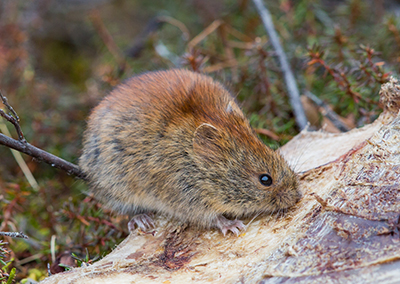
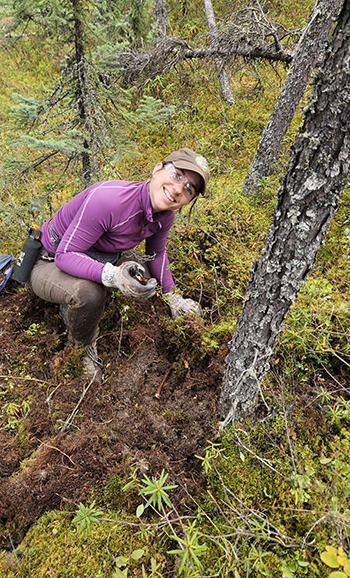
With a better idea of what the spruce stand voles were eating, Hagelin and Allaby helped collect root tips from both black and white spruce trees to see where their fungal symbiotes overlapped with the fungi the voles were helping to spread. While the project is ongoing, early efforts suggest that the voles indeed seem to be important agents in improving the health and growth of spruce in Alaska. Red-backed voles are one of the most abundant rodents in Alaska and, while they barely tip the scale at 40 grams (about the weight of a golf ball), they seem to be inoculating soil with mycorrhizal fungi across the state and helping to build forests of birch, poplar, and spruce trees.
Alaska Mushroom Hunting
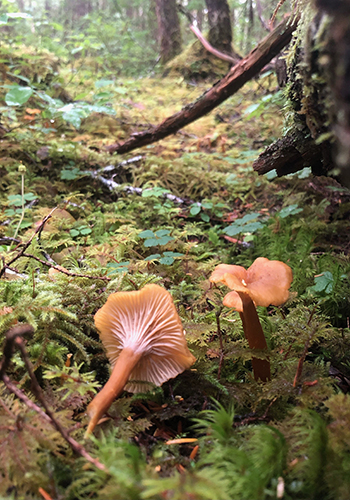
Foraging for mushrooms is popular in Alaska. Field guides, mentors, local mycological societies, workshops, and study are the friends of the new mushroom hunter.
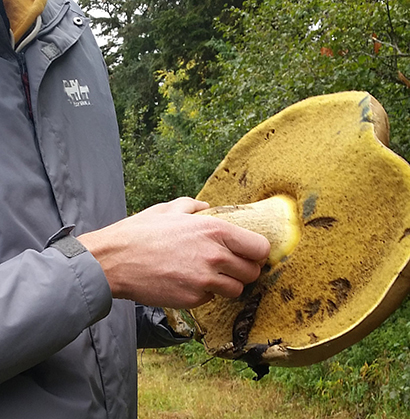
Foraging should always be undertaken with caution, and no mushroom should be consumed without being sure of what it is or asking someone with more experience or specialty (never rely on AI for ID). More than one identification method should be verified before attempting consumption. Many edible mushrooms also have not-so-edible lookalikes, make sure you learn the differences if you seek to forage. As always, try to leave habitat relatively undisturbed and take only what you need, leaving plenty for future growth and other foragers. Mushrooms intended for consumption should also be mature specimens free of insects and dirt when collected, and in areas away from potential contamination. If it’s your first time eating wild mushrooms, start with small amounts to test your reaction to it and always cook thoroughly. Drinking alcohol with some types of (otherwise edible) mushrooms can cause reactions that make them toxic and should be avoided.
The wide variety of interesting mushroom species can most often be spotted from May through September and sometimes into October, everywhere you can find plants. There are many resources for those interested in joining the mushroom community. Look below for a place to start:
- iNaturalist citizen science project: Plants and Fungi of Alaska
- Mushrooms of the National Forests in Alaska (iNaturalist) pictures of common Alaska mushrooms
- Mushrooms of the National Forests in Alaska – downloadable PDF of a nice USFS publication, a handy pocket field guide to common Alaska mushrooms
Subscribe to be notified about new issues
Receive a monthly notice about new issues and articles.