
Alaska Fish & Wildlife News
October 2026
A World of Waterfowl
Making the Field the Classrom
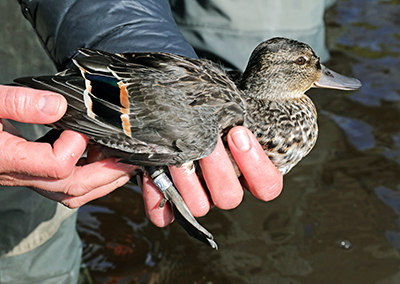
I can feel the heartbeat of a green-winged teal against my palm as I place a small, numbered metal band around her right leg. She weighs a little more than half a pound, but this tiny duck may travel thousands of miles this winter before returning to Alaska next spring. This teal hen, hatched this summer, now has a unique ID.
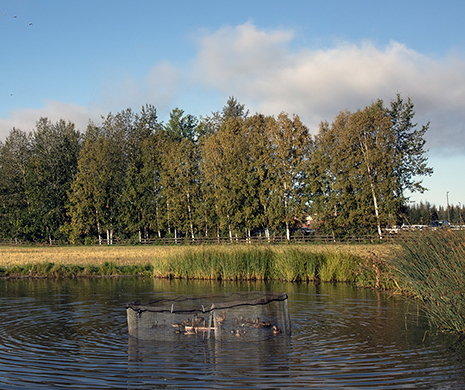
I am standing knee-deep in a pond in the middle of Creamer’s Field Migratory Waterfowl Refuge in Fairbanks on a 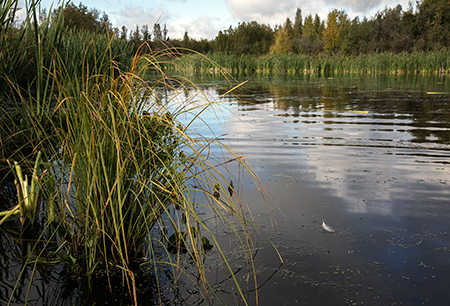 beautiful but chilly August morning, and I have been lucky to help ADF&G Waterfowl Program and Creamer’s Refuge staff band ducks this month.
As I release her into the air, I wonder: where will she go, what will she eat, and how far south will she make it this winter?
Banding birds
The ADF&G Waterfowl Program bands thousands of ducks and geese each year. Banding gives individual birds an identification number that can be seen 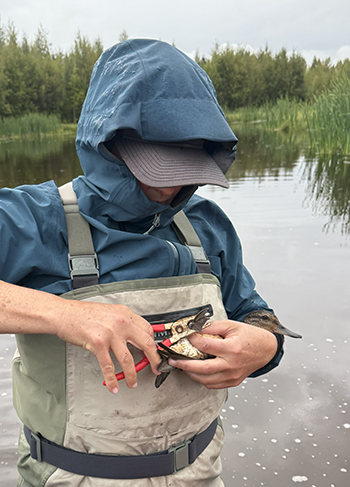 and reported by wildlife watchers, hunters, and scientists wherever the banded bird is observed. Banding birds helps scientists track bird survival, estimate abundance and population trends, and inform harvest regulations. The most abundant and harvested duck species – mallards and northern pintails – are the main targets of these banding efforts. However, every bird captured is banded. With millions of birds to monitor, every banded bird contributes another data point. Jen Curl bands a drake Green-wing Teal, right
Anyone who resights and reads the number of a banded bird can look up when it was banded and who banded it and submit a report (Report a Band). Banding was one of the first methods biologists used to connect an individual bird in one place with that same bird somewhere else. Banding helped scientists better understand bird migrations and preceded other methods of tracking birds and their movements over time, such as satellite tags, geolocators, and other tracking devices.
For me, there was an additional layer to being out in the field and assisting with banding and collecting data. My work focuses on K-12 students, or the next generation of Alaskan wildlife biologists, hunters, recreationists, and natural historians. Specifically, the Wildlife Education and Outreach Program creates educational materials to encourage educators and students to learn outdoors about local wildlife and ecosystems.
Waterfowl as Wild Wonders
Waterfowl – or ducks, geese, and swans – are a perfect group of wildlife species to highlight for outdoor learning, because almost all communities in Alaska have waterfowl present for at least part of the year. In summer, many waterfowl species nest across the state. In spring and fall there are big pulses of thousands of migratory birds passing through many areas. Some regions even have populations of waterfowl that stay for winter.
Listening to geese fly overhead, feeling my toes grow colder, and watching each duck fly away with a new band brought me back to a question I often have in the field: what would a comparable experience look like for a student? Students may not be able to physically band ducks, but they can practice many of the same skills wildlife biologists use—observing their surroundings in detail, asking questions, looking for patterns, and collecting their own data.
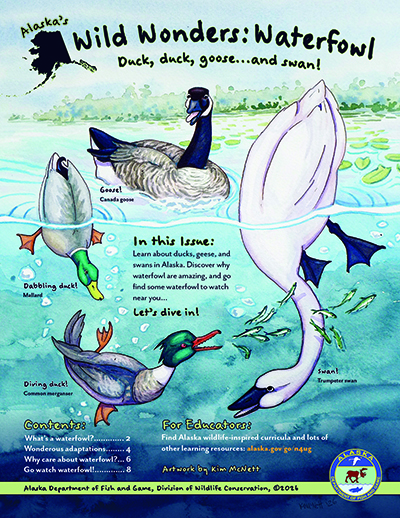
Wild Wonders: Waterfowl – duck, duck, goose, and swan! features information about different waterfowl species, adaptations that help them survive, how scientists track and study waterfowl, and why waterfowl are important toAlaskans. Additionally, on each page there are designated spaces for students to practice drawing, introducing another theme of the issue: nature journaling.
Nature journaling is a personal record of places students visit and what they notice about the natural world while outdoors. Nature journaling is also a great way for students to develop one of the most fundamental skills that scientists use: careful observation.
When in the field, students can record a variety of observations while creating journal entries: weather, date, specifics about the location they are visiting, what kind of habitat they happen to be in, what plants are in the area, animals present and their behaviors. Students are also encouraged to use any combination of their own words, numbers, and pictures to record observations.
Nature journaling invites students to dive deeper into what they notice as they spend time watching and recording. What do they wonder about? What is that duck doing when it tips upside down? Why is that flock of geese so noisy? Why are some ducks so flashy and bright while others are not? How do waterfowl stay warm in cold water?
Nature journaling gives students multiple ways to engage with what they see, hear, smell, and touch. It can involve looking, listening, writing, drawing, and moving through a landscape. Spending time outdoors also provides a valuable break for students from technology and screens while helping build connections with the outdoor spaces and wildlife around them.
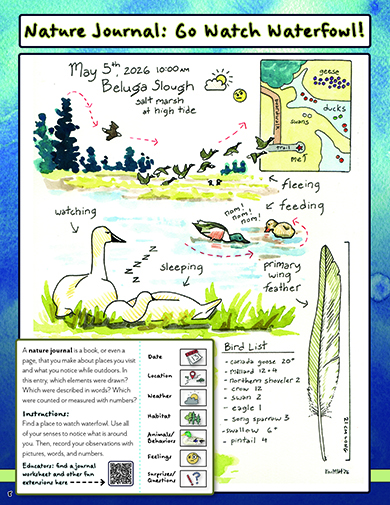
Hard copies of Wild Wonders are provided in class sets to educators that subscribe by email. There is also a digital version and a printable pdf of every issue. The issue webpage has resources to help educators build a larger unit about waterfowl for the classroom – a nature journal template page, list of terms, learning standards, related links, and lesson plans for activities that relate directly to wetlands and waterfowl.
The new issue of Wild Wonders aims to bring waterfowl into the classroom and offers a way to get students out into the field to experience the world of waterfowl.
I want students to see themselves as artists, data collectors, and scientists, so that every visit to a neighborhood pond, wetland, river, or shoreline is an opportunity to observe, record, and wonder about the wildlife they encounter.
Jen Curl is the statewide Teacher Resource and Youth Education Specialist for the ADF&G Wildlife Outreach and Education program and works out of the Fairbanks office.
Subscribe to be notified about new issues
Receive a monthly notice about new issues and articles.