
Alaska Fish & Wildlife News
August 2026
Tree Swallows in the North are Declining Faster
Alaska monitoring efforts reveal why
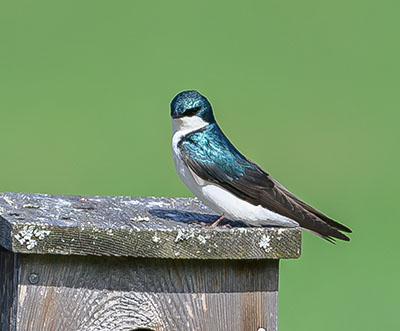
Tree Swallows are common aerial insectivores—birds that catch insects in mid-flight—that breed across North America. Despite their abundance, swallow populations have been declining for more than half a century. A new scientific study found that northern breeding Tree Swallows are declining faster than their southern counterparts. Data collected at Creamer’s Field Migratory Waterfowl Refuge in Fairbanks, the northernmost site in the study, played a key role in uncovering why.
Tricia Blake from Alaska Songbird Institute led the Creamer’s effort, and along with Alaska Department of Fish and Game’s Julie Hagelin, was a co-author on the new study led by Cornell University. Together they examine nearly 95,000 nests across five decades and 123 sites from Alaska to the southern United States. They analyzed breeding timing, nesting success, and population trends, alongside external pressures such as rising temperatures.
Spring is arriving earlier in Alaska now than in the past, and the study found that Tree Swallows are reaching their breeding grounds sooner during warmer years. For many songbirds, early arrival can be advantageous. But it’s an increasingly risky strategy for Alaska’s Tree Swallows because our springs are notoriously unpredictable. Even in years that start warm, sudden cold snaps, heavy precipitation, and other extreme weather remain common. When Tree Swallows arrive and nest earlier, they overlap more with this volatile period, leaving nests vulnerable to abrupt temperature drops, intense storms, and rapid changes in insect availability.
A timing “squeeze” that exposes Alaska’s early-arriving Tree Swallows to harsh spring conditions is compounded by a migration strategy that presumably takes birds near the edge of physiological limits. The Tree Swallows nesting in Alaska tend to winter in Mexico. Northern populations can migrate over one thousand miles farther than southern birds, a journey that demands extraordinary energy and leaves only a narrow window for recovery before breeding. Operating so close to their endurance threshold, individuals may have limited flexibility to cope with additional stress from rapid environmental changes on the breeding grounds or along their migratory routes.
Tree Swallows likely face pressures beyond Alaska too, including widespread insect losses—one 2019 study estimated that 41% of insect species globally are in decline. Because of these combined pressures and long-term declines, Tree Swallows are listed as a Species of Greatest Conservation Need in Alaska. The Threatened, Endangered, and Diversity (TED) Program at ADF&G works to manage the declines by partnering with research like this on the breeding grounds, as well as communities and organizations along migration corridors to help ensure that Alaska’s breeding birds travel through healthy, intact habitats.

Although the study’s findings are sobering, they underscore the tremendous value of long-term monitoring at sites like Creamer’s Refuge. Tree Swallows have been continuously monitored there since the 1990s—an exceptionally long dataset for northern ecosystems.
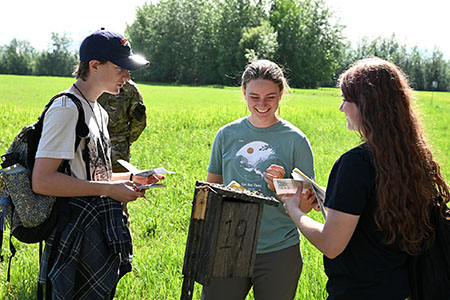
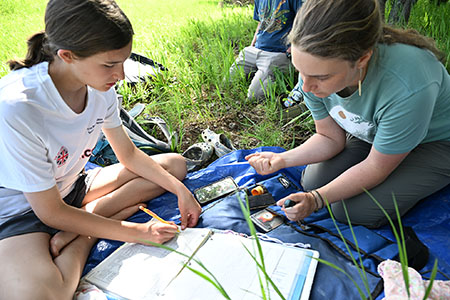
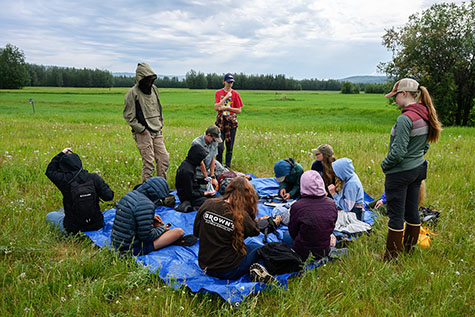
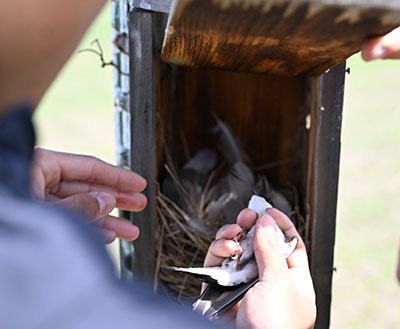
One of the most inspiring aspects of Tree Swallow monitoring at Creamer’s Refuge is how deeply it involves young people. ASI’s Tree Swallow Ecology Project trains youth ages 10 to 18 through mentorship and internships, giving them hands-on experience in field science. Because Tree Swallows nest in accessible cavities and human-made nest boxes, students can intimately observe and record every stage of the nesting season—from egg laying to fledging. Some young participants have gone on to pursue careers in wildlife, conservation, and ecology, carrying forward the spirit of stewardship that this long-term project embodies.
Individual Alaskans can help support Tree Swallows by installing and maintaining nest boxes or contributing swallow observations to citizen science efforts like eBird and NestWatch—both important data sources for this study. People can also follow nationally-recommended simple actions to help birds like adding adhesive dots to windows and keeping cats indoors or leashed.
Decades of collaborative work by ASI and others at Creamer’s Refuge have done more than document change: they have built a powerful foundation for understanding how northern ecosystems, including Tree Swallows, respond to a warming world. Just as importantly, they have built a community of young scientists. Ultimately, it’s a story not only about the challenges Tree Swallows face, but about the scientific strength and value of long-term monitoring—and the people who make it possible.
More
Tree Swallow species profile
Swallow Tales: The Plight of Aerial Insectivores, Alaska Fish and Wildlife News, July 2025
Swallows in Boxes: Tree Swallows in the Juneau area, Alaska Fish and Wildlife News, 2022
Subscribe to be notified about new issues
Receive a monthly notice about new issues and articles.