
Alaska Fish & Wildlife News
May 2026
Ask a Wildlife Biologist features popular songbird
How many eggs does a chickadee lay?
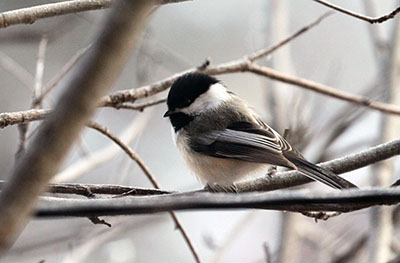
A student at Birchtree Charter School asked, “How many eggs does a chickadee lay?”
Chickadees are fairly tame and are perhaps the most widely recognized songbird in Alaska, given their recognizable call of chicka-dee-dee-dee and their frequent visits to birdfeeders. They are found across the state and are year-round residents. They survive the cold winters by lowering their body temperatures at night to save energy and by caching food, with a remarkable memory to find each stash again.
Alaska is home to four species of the little birds: Black-capped chickadees, Boreal chickadees, Chestnut-backed chickadees, and Grey-headed chickadees. Black-capped and Boreals are found throughout most of the state, Chestnut-backed chickadees are found along the coastal rainforest and Grey-headed chickadees are a very rare spot in the far north. ADF&G’s Threatened, Endangered, and Diversity Program has an ongoing monitoring project for the Gray-headed Chickadee, confirming the rare sightings and tracking and investigating the decline of the species in North America.
Chickadees are cavity nesters, meaning they will build their nests in old woodpecker holes usually, though they will also use nest boxes if natural cavities are scarce. Both birds will clean and excavate a cavity, but only the female will build the nest, often using moss and other coarse material as a base structure and lining it with softer material like animal fur and feathers inside. They will start building their nest 1-2 weeks before laying their eggs. The timing of egg-laying can depend on weather, local food supplies, and the health of the birds. In general though, Lower 48 chickadees have been found to lay eggs anytime from late April into June while farther North chickadees can start laying in late May.
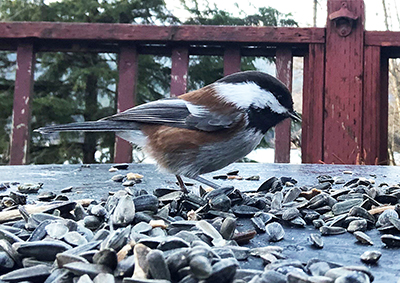
Once the female lays her clutch of 5-10 eggs, she will incubate them for about two weeks while the male brings her food. The chicks are featherless and helpless when they hatch, with both parents working to keep them fed until the chicks are ready to fledge a mere 16 days later.
If attracting chickadees to your yard with a birdfeeder, make sure to put the feeders away in spring so as not to bring in bears instead. Keep feeders within 3 ft of glass or farther than 30 ft to deter window collision, or install decals on the outside of glass to break up window reflections.
A few fun facts:
Named for their distinctive “chick-a-dee-dee-dee” call.
Grey-headed chickadee is the northernmost chickadee in the world. Elsewhere it is known as the Siberian tit – tit being Old English for small (or tid, as in tidbit).
Chickadees are in the Paridae family which includes tits and titmice, and Europeans refer to “their” chickadee species as tits.
There are about a dozen African and Eurasian chickadee species, and seven North American species.
Subscribe to be notified about new issues
Receive a monthly notice about new issues and articles.