
Alaska Fish & Wildlife News
March 2026
Monitoring Emperor Geese on Kodiak Island
ADF&G Expands Long Term Banding Effort
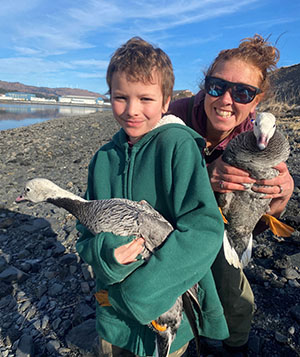
Each winter, Kodiak Island serves as an important refuge for Emperor Geese; one of Alaska’s most iconic and culturally significant waterfowl species. Arriving in late August and remaining through April, these striking birds rely on the island’s rich coastal habitats, foraging on blue mussels, barnacles, marine invertebrates, algae, and newly emerging shoreline vegetation.
This winter, the Alaska Department of Fish and Game continued its long-term effort to better understand this population by conducting its sixth year of capturing and banding emperor geese along the Kodiak Road system. This work was accomplished with help from a dedicated team of seven biologists and many local volunteers.
Tasha DiMarzio, a waterfowl biologist with ADF&G, was part of the crew and appreciates the help of local volunteers.
“One highlight of working so close to local communities is the opportunity to involve volunteers and children directly in the banding process,” she said. “It’s always fun to watch kids hold their first goose and see firsthand the work Alaska Fish and Game biologists do. When local residents get the chance to participate, they often develop a stronger connection to the birds in their own backyards—an appreciation that can inspire them to become citizen scientists and contribute to long-term conservation efforts.”
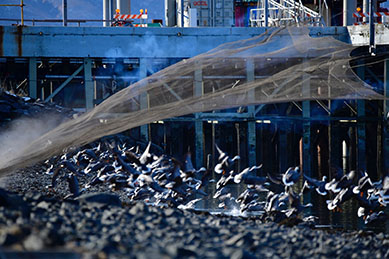
Using rocket nets, the crew safely captured over 200 Emperor Geese, including 175 birds that received new bands and 35 individuals that had been banded in prior year. Each goose received a federal metal leg band as well as a brightly marked, field-readable plastic band, enabling both professionals and citizen-scientists to resight banded birds throughout the years. Biologists also collected body measurements such as weight, tarsus length, and culmen length to assess body condition and compare Kodiak’s wintering birds to other populations across the species’ range.
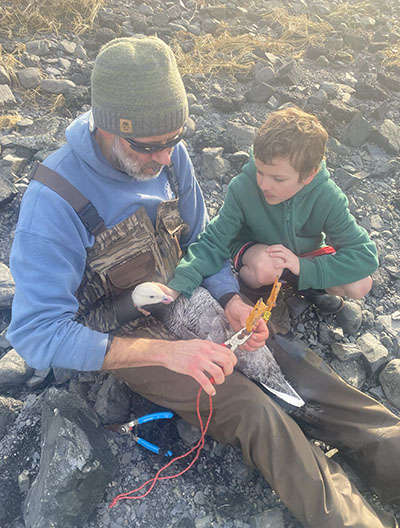
This data contributes to a long-term project monitoring populations of emperor geese in Kodiak since 2019, helping researchers track annual survival, winter distribution, and family group structure over time. Public participation plays a meaningful role in this effort, and ADF&G encourages waterfowl enthusiasts to report sightings of banded Emperor Geese whenever possible. Each resighting adds valuable information that strengthens conservation planning for this unique Arctic species and helps ensure healthy populations for future generations.
Subscribe to be notified about new issues
Receive a monthly notice about new issues and articles.