
Alaska Fish & Wildlife News
March 2026
Mountain Lion Hunting in Alaska
Part 1 – Are they here? Where do they come from?
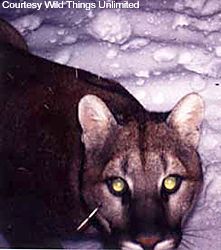
Mountain lion hunting is now legal in Alaska. Which might seem weird since Alaska is not known to have mountain lions.
In January, the Alaska Board of Game carried a proposal to establish a hunting and trapping season for mountain lions in Southeast Alaska, where all five of the only documented reports of the animals have occurred. The documentation is a mix: one photograph with scat and tracks, and four dead animals – two trapped and two shot – all since 1989 in the general area of Wrangell. In addition, there are a handful of credible sightings.
That might seem like slim pickings for hunters. Wildlife Biologist Frank Robbins, who works in the area where hunting can now occur, noted at the Board of Game meeting that there is no established breeding population of mountain lions in Southeast Alaska or harvestable surplus. Alaska may not have mountain lions, but it’s adjacent to a place that does.
It’s very likely all those animals came down the Stikine River corridor from British Columbia, home to a large and established population of mountain lions. Massive icefields and coastal mountains lie between BC and the Alaska Panhandle, but a few river corridors offer potential routes to the coast. A look at the mountain lions over the border – where they tend to call them cougars – provides a good picture of what we can expect here in Alaska.
Neighboring lions
Southern British Columbia has prime cougar habitat, but the Southeast Alaska Panhandle borders northern British Columbia. Southeast Alaska is mediocre cougar habitat, with lots of snow and established predators. It seems uninviting, but cougars are expanding their range. A Review of Cougar Biology and Management in British Columbia, a 2023 provincial report states that: Cougars occur throughout most of the southern half of the province and are expanding their range northward... the provincial population is estimated to be 5,000–7 000 animals.
“Parts of British Columbia are ideal habitat, grassland and mixed forest, places you’d think of as good deer habitat, and they have a high density of cougars,” said Wildlife Biologist Garth Mowat.
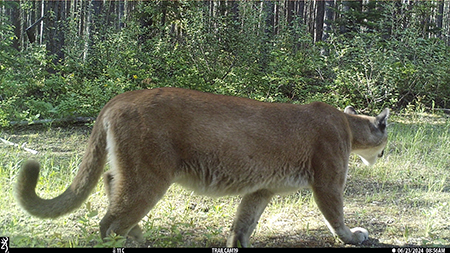
Mowat is the Large Carnivore Specialist for the province of British Columbia and the lead author of the report. The report offers a wealth of insights, and Mowat provided specifics in a conversation from his office in Nelson, BC, about two hours north of Spokane Washington. It’s good cougar habitat.
He started his career almost 40 years ago in the Yukon Territory - several hundred miles north. He said cougars were unknown there at that time. “They didn’t even have word for it in local language,” he said. That’s changed.
“I was up there again this summer and now they have sightings and cougars showing up more and more. The population model shows a continued increase in population numbers in northern British Columbia.”
The main reason is deer., according to the report: Cougars are expanding their range northward, likely following northward expansions of white-tailed deer…Northward expansion of cougars in British Columbia is likely to continue, particularly in response to reduced snow levels from climate change that will generally favor higher ungulate prey abundance.
Deer are cougars’ most important food. On average, cougars kill one deer-sized prey every six to ten days. Cougar also eat snowshoe hares, beavers, porcupines, grouse, raccoons, mustelids, and seals along the coast.
Cougars and snow
“The increase is more in the east than the west, in British Columbia,” Mowat said. “The west part has a lot more snow, and cougars do not do well in snow.”
He said that even in areas where cougars are relatively abundant, they avoid deep snow.
“In winter cougar are pushed down out of mountains when snow gets deep. They respond really strongly to snow depth, and they go to the same places where the deer go. The cougar here (in winter) are right down in the backyards.”
“The part of Western British Columbia that borders Southeast Alaska has very few cougars, and we get a lot of snow there in the winter,” he said. “There are not as many deer there either. So, there are not too many showing up in the Panhandle, because of the snow and how much they can handle in winter.”
Access to Alaska
The southernmost transboundary river entering Southeast Alaska is the Unuk River, northeast of Ketchikan. But it’s not a good candidate.
“The headwaters of Unuk is snow country, not deer country, and there are not many deer in that area,” Mowat said.
The Taku River is just southeast of Juneau, with its source in the northwest corner of BC.
“They might come down the Taku, but I don’t know of any cougar sightings up at the headwaters of the Taku,” Mowat said. “It’s really boreal there, more caribou country than deer country. The Stikine would be far more likely.”
The Stikine is about halfway between Juneau and Ketchikan and offers potential. “Cougars are known around Telegraph, on the upper Stikine, that whole area is actually quite dry, and there are breaks along the river there that are dry and grassy. What you think of as good deer habitat.”
It’s a good route, with a source population at the headwaters and prey. And there is incentive for young animals to move. Cougars disperse from their natal range as subadults at about a year-and-a-half of age and males are known to move hundreds of kilometers. A study in Saskatchewan found that females dispersed an average of 150 km, and males dispersed an average of 350 km.
Adults with established home ranges are unlikely to welcome new arrivals. Intra-specific strife occurs regularly among cougars; adult males dominate and may kill subadult or dispersing males. Infanticide of kittens is common.
Snowy Southeast is not ideal habitat, but at least there isn’t competition from other cougars. But wolves and bears also pose a threat, primarily as competition for resources. The cougar report notes that: “Cougars often lose kills to other predators and alter their habitat use or prey choice to avoid conflict. Cougars are generally solitary hunters and can incur injuries or be killed by other large predators that outweigh or outnumber them. In ecosystems where wolves are abundant, approximately 18–22% of cougar kills are scavenged by wolves…In some places, bears rely heavily on cougar-killed carrion before and after hibernation and can detect carrion over 1 km away, often displacing cougars within a few hours of making a kill.”
Credible sightings
Mountain lions are notoriously elusive, largely nocturnal, and they are rarely sighted even in places where they are known. Every few years Alaska Fish and Game gets a report of a sighting. A report in Juneau around 2016 turned out to be a free-ranging yellow Labrador retriever. About that same time, several reports north of Ketchikan came with tracks in the snow. I asked Mowat how he judges if a sighting is credible.
“We have cougars, so a sighting is likely to be credible,” he said. “We check the track. Ask people to take a picture of the track. If you have a good picture, you can identify it. They’re pretty distinct. Tracks can be hard to photograph, especially in snow, but in sand or dirt, they can be good - and good evidence.”
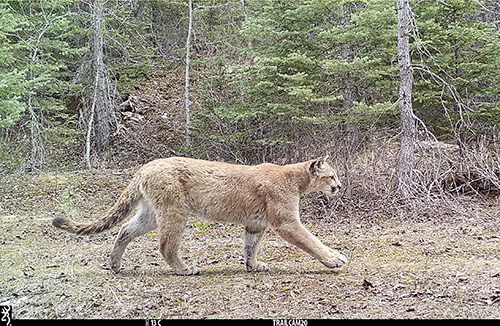
Cougars are extremely difficult hard to photograph in the wild, Mowat said. “They’re fleeting, and they don’t stand around and let people look at them.” But not all cameras require a photographer. “Most of our sightings today are from trail cameras. Naturalists and hunters putting out cameras. Once you have cameras out there you know if you have cougars.”
“They’re nocturnal, so not easy to see but the cameras get it,” he added. “People have cameras for bears and they see cougars, because they’re also on the game trails. We get lots of cougar pictures on trail cameras, and we have lots of cougars in Southern British Columbia.”
Cameras in the Southeast forest
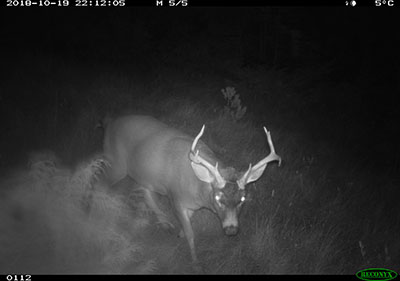
ADF&G deployed close to 100 motion-triggered trail cameras in the Petersburg area north of Wrangell (GMU 3) for deer research, capturing close to a million pictures over the past five years or so. This is the general area where reports occurred. There are also trail cameras in use north of Ketchikan (GMU 1A) for deer research. Not one image of a mountain lion was recorded and no images have been reported from trail cameras operated by the public.
During the winter of 2018, 50 cameras were deployed in the forests along the road system north of Juneau. Fisher have been colonizing northern Southeast Alaska (in a manner similar to the mountain lion movements), coming down the Taku River, and researchers wanted to document this and better understand the effect on marten and ermine. The cameras captured almost 85,000 photos, including 15 different animal species. Fisher, the target animal, were detected 26 times on nine cameras, marten 204 times and ermine 507 times. No mountain lions were detected.
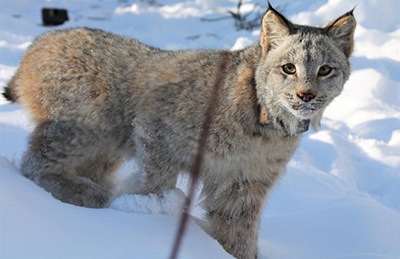
A similar study that began around 2020 focusing on lynx is taking place a bit further north in the Haines area at the northeastern “top” of the Panhandle. Lynx are also coming into Southeast from Canada, in pursuit of their preferred prey, snowshoe hares. About 60 cameras have been deployed in the Chilkat Valley, and while some lynx have been photographed, their larger cousins – mountain lions – have not.
Next month we’ll look at the new regulations and how people typically hunt mountain lions. Mountain lion hunting in Alaska Part 2 – How might this work?
More on Mountain Lions
A Review of Cougar Biology and Management in British Columbia
AFWN article: “Is it a Mountain Lion? Using forensics for fur”
Subscribe to be notified about new issues
Receive a monthly notice about new issues and articles.